It’s no surprise that pros rip through paddles like crazy — some, like Quang Duong, are lucky to get a full week out of one paddle before needing a fresh replacement.
For us mere mortals, the active lifespan of a pickleball paddle is considerably longer. But at some point, old faithful will feel tired and it’ll be time for an upgrade.
So how do you know when to replace your paddle? Here are a few surefire signs:
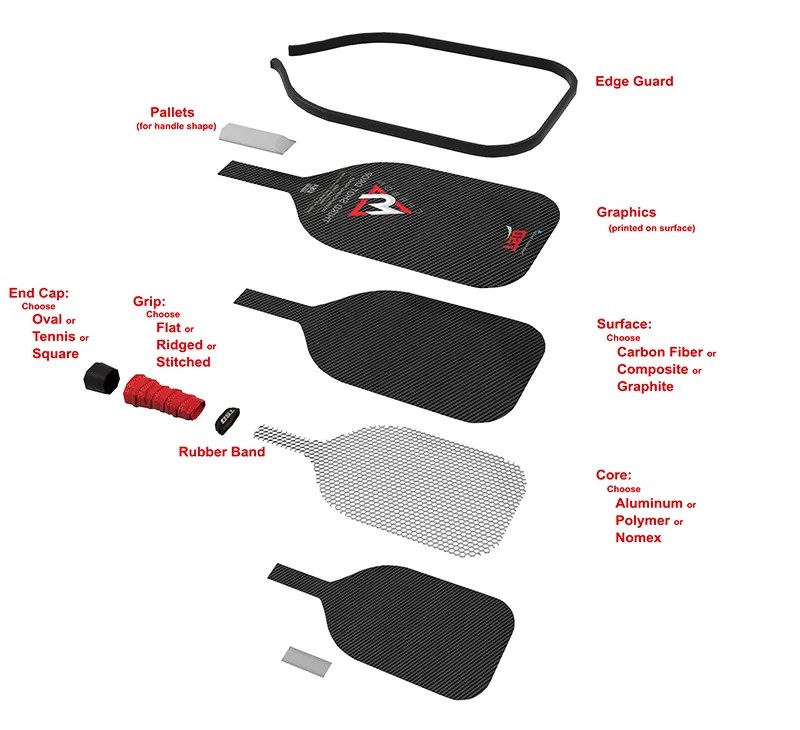
✅ Give it a shake. No actually, shake your paddle like a maraca. If you hear a rattle, that’s glue from the core that’s come unbonded. This in itself doesn’t mean your paddle’s a goner, but it could be a sign it’s on its way. Keep an eye (and ear) on it.
✅ Feel the core. Push both thumbs hard into the center of the face. If you feel and hear a noticeable crunching, your core is compromised. This means your paddle is beyond the break-in period and is now just broken. Time to switch it out.
✅ The grit is gone. For amateur players, grit is key to control. Modern paddles prioritize rougher surface textures as a function of performance, but it wears out over time. If your paddle face feels like glass, you’re not doing your game any favors.
✅ Rough around the edges. If the edge guard is loose or peeling off, beware — this can have a big impact on the sweet spot of the paddle. Some super glue could be all you need, but if it’s a bigger fix, it’s likely time to upgrade.
✅ Know your game. Ultimately, there’s no one-size-fits-all rule here — it depends how often you play, how hard you play, what conditions you play in, etc. But if you’re consistently missing routine shots, it could actually be the paddle.
Before you trash a paddle, check the brand’s warranty policy. Many paddle companies offer a six-month or full-year guarantee on a range of issues. So you could very well get that much-needed replacement free of charge.