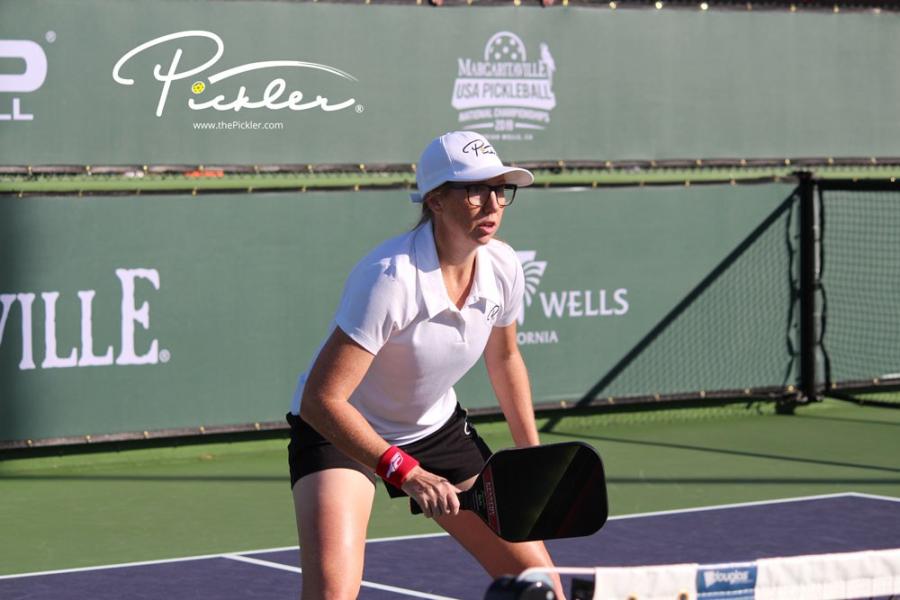
Before mastering volleys or working the angles, you need a solid foundation — your ready position. The right stance at the kitchen line determines how quickly you react, how efficiently you move, and how well you control each exchange.
Whether you’re facing a lightning-fast drive or a soft dink, your body positioning, paddle angle, and balance dictate your success. Here’s how to set yourself up for confident, consistent play right at the kitchen line.
Your stance sets the tone for every rally.
This ready position keeps you mobile for fast reactions while maintaining control over balance and court positioning.
Keep your paddle out in front of your body, with a slight bend in your elbows so you can see your paddle in your peripheral vision. This forward paddle position helps you react quickly without having to pull your arms back to load your swing. If your arms are locked out, you’ll lose control and power; if they’re tucked too close, you’ll get jammed on quick volleys. Stay balanced, loose, and ready to adjust.
For your grip pressure, keep a relaxed grip, about a 4 out of 10. Squeezing too tightly reduces touch and reaction time. A light hold lets you absorb pace on blocks or generate quick flicks on attacks.
Most players hold their paddle between chest and belly button height, depending on their comfort and reaction style. The right paddle height for you will depend on your reaction style and your opponents. Many players traditionally hold the paddle at chest level, which helps defend high drives and fast attacks. However, there’s a growing trend toward holding it closer to the belly button for faster reaction time on low shots.
Holding your paddle around belly-button height gives you balanced coverage as it’s an equal distance to move up for high volleys or down for low ones. This position can help you respond more quickly to body shots or fast exchanges at the kitchen line.
Your paddle angle should sit in a semi-backhand position, roughly 10 or 11 o’clock for right-handers (2 or 1 o’clock for lefties). This gives you a ready defense for both forehand and backhand volleys while keeping transitions quick. Keep your paddle head slightly up and visible to your opponent; ready to block, punch, or roll your next volley.
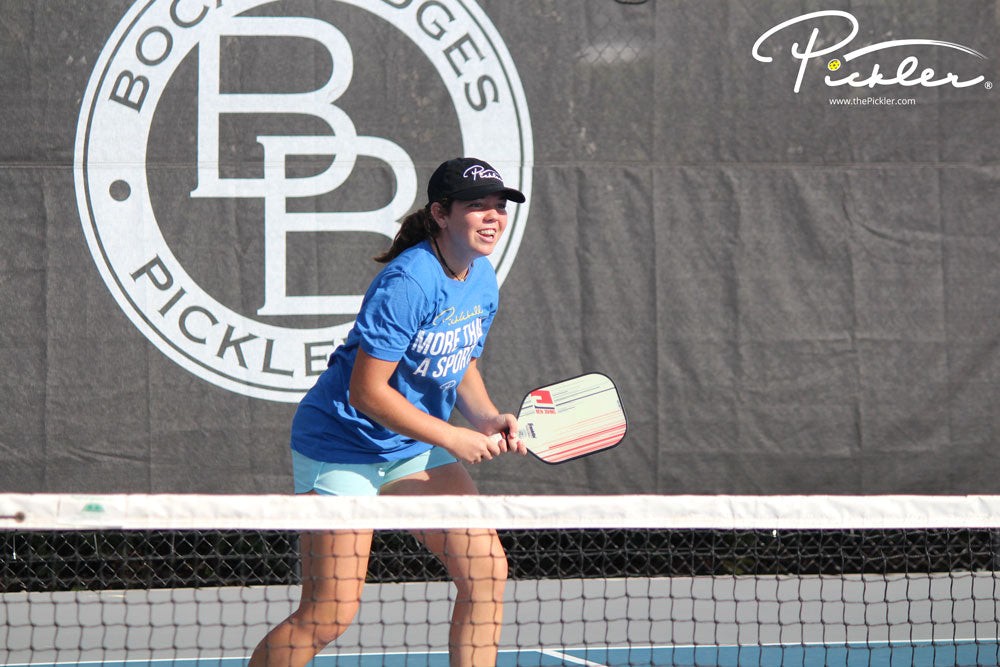
At the kitchen line, footwork is all about micro-adjustments. Quick, efficient steps can keep your paddle centered and your balance in check.
Think of your feet as your game’s steering wheel. Smooth, efficient movement keeps your body in sync and your reactions sharp.
Your ability to react fast at the kitchen line comes from consistent, focused drilling. The more your body and mind learn to recognize patterns, the faster your paddle will move when it matters.
For a great place to start, check out Pickleball Drills to Up Your Skills: DIY Volley, Dink & Wall Drills.
Want to take your speed up a notch? Pair that with Improve Your Pickleball Hand Speed with These 2 Drills to train fast reflexes and sharpen your quick-fire exchanges at the non-volley zone.
Explore Partnering with a Giant: Hitting the Wall in Pickleball for an insider’s perspective on why wall practice is such a powerful training partner, and pointers to help you get started.
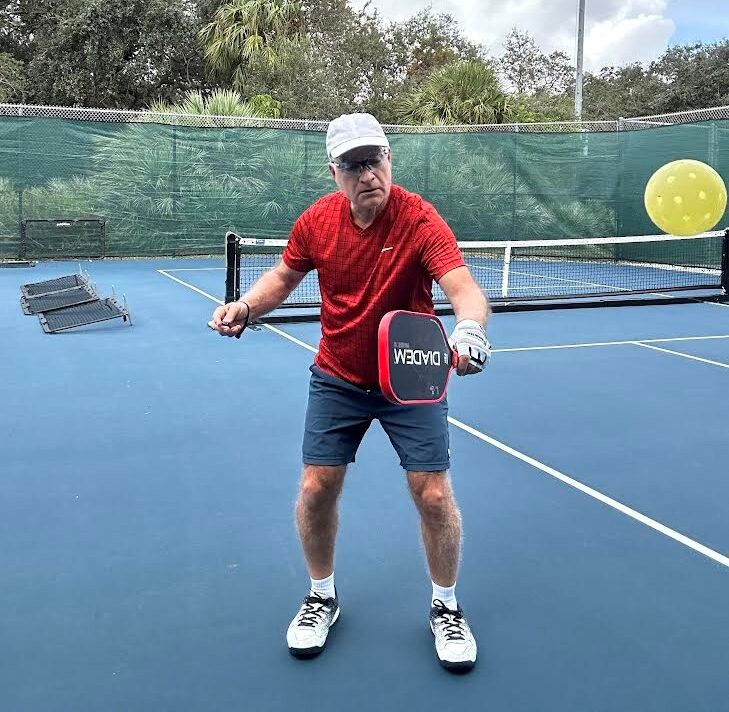
Your ready position should evolve with your strengths, weaknesses, and the opponent across the net. Make subtle adjustments to keep you balanced, confident, and always one step ahead. Remember, your ready position should work for you and your game.