Stacking looks complicated, but get past all the fancy movement and it actually telegraphs exactly where your opponents are going.
Do you buy a paddle new and just play with it as is, stock out of the box?
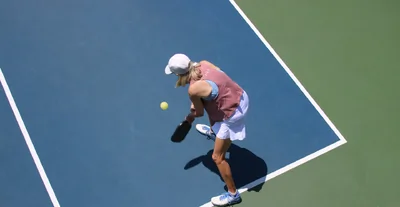
Reps are great, but if you’ve plateaued, keep making the same errors, or find yourself avoiding a certain shot or skill repeatedly, it might be time to seek professional help. And trust us here, there’s absolutely no shame in that game.
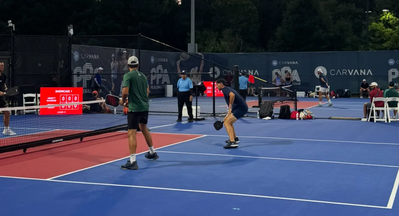
We've all been body bagged or lost a long rally and felt the urge to exact immediate revenge by playing fast and dumb instead of smart and deliberate.
“An enormous part of improving your pickleball level is strengthening the mental side of the game,” says pro Eric Roddy. “And for amateurs, this crucial mental maturation is often as simple as overcoming one shot: the frustrated speed-up.”
Sure, ripping a passing drive or smashing an overhead through the back of the court feels great. But there’s something uniquely satisfying about winning a point off a perfectly disguised dink.
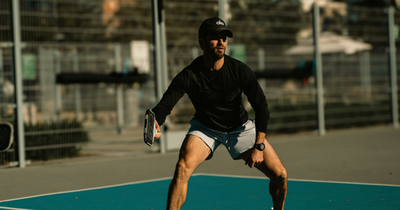
You've been there: you dig out a tough ball, get it back over the net clean, and the other team just... puts it away anyway. Getting the ball over is only half the job.
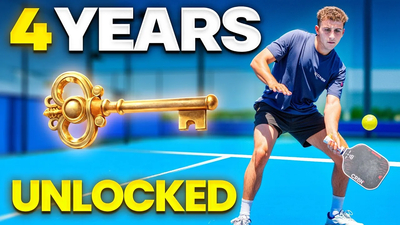
Tanner Tomassi is probably the most prolific content creator in all of pickleball. The dude has been at it so long, he literally wrote the book on how to improve every facet of your game. But he doesn’t just talk the talk. He’s been a pro on the APP Tour for four years now, amassing plenty of podium spots along the way.
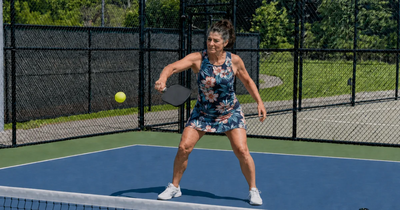
When someone fires a hard ball at you, the natural reaction is to send it right back. But according to Senior Pro Gina Cilento, advanced players recognize when another hard shot will only keep their opponent in control.
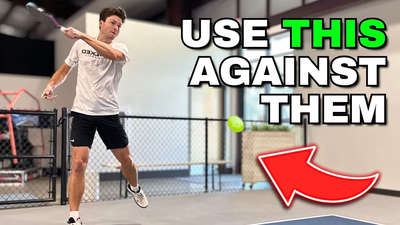
By and large, pickleball players tend to fall into a handful of distinct categories. Every player has strengths and tendencies, and the way they play can reveal whether they rely on heavy spin, raw power, patience, or consistency.
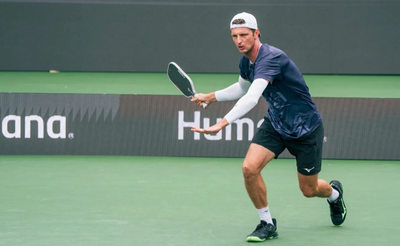
Here at The Dink, we know a lot about pickleball strategy and technique. We live this sport, after all—studying it, watching it, and playing it ourselves.
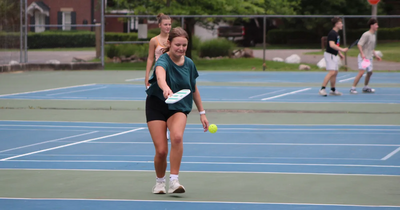
Every new pickleball player wants to improve quickly, but many skip the fundamentals and jump straight to advanced shots. According to Senior Pro Gina Cilento, building the right foundation is still the fastest way to become a better player.
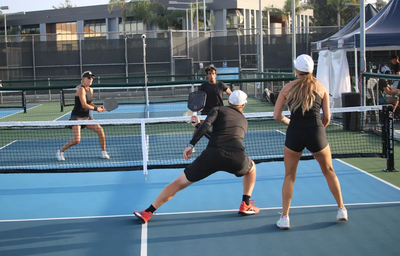
It’s fun, rewarding, and productive to focus on how we can all win more pickleball games. But we often overlook the heart of the problem: why we’re losing to begin with.
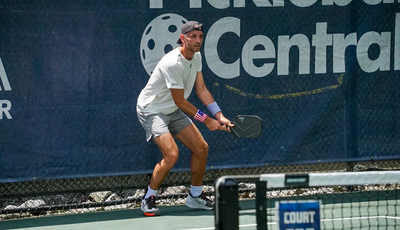
We’ve harped on this before. Warned you about adapting or being left in the dust. And yet, we’re still seeing plenty of amateur players stubbornly go about their business without a reliable two-handed backhand.
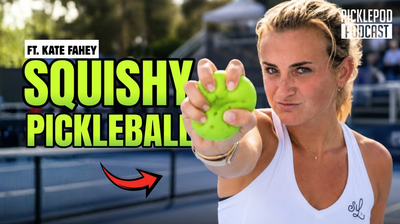
Kitchen defense is often talked about in absolute terms: you want to be a brick wall up there, defending the line like your life depends on it.
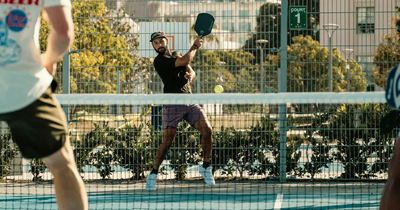
Topspin gets treated like an advanced skill, but it's really just a small swing adjustment with a big payoff—a dipping ball is harder to attack and easier to keep in bounds than a flat one.
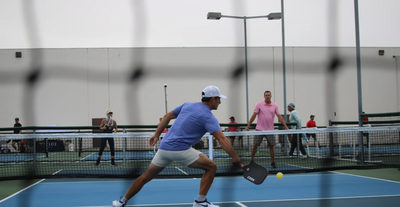
The concept of poaching in pickleball gets a bad rap. Too often, it implies someone over-playing their position, being too aggressive, or just generally acting like a ball-hog. And nobody likes a ball-hog.
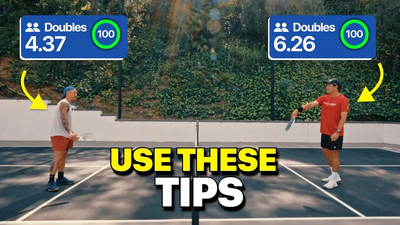
What happens when a really good pickleball player gets on the court with a great one?
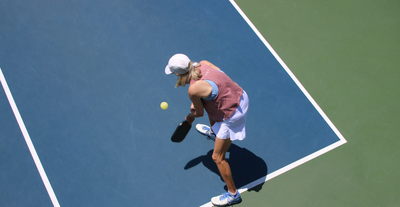
From the time you just start playing to the most competitive courts at your local facility, there’s one piece of advice put on repeat: get the ball down at your opponents’ feet every chance you get.
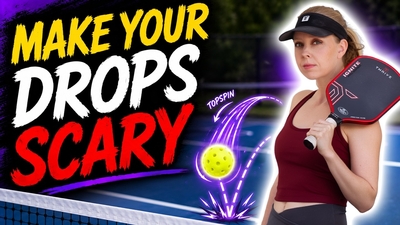
There’s nothing wrong with hitting a comfortable and safe third shot push or shovel drop. But sometimes you need to apply a little extra pressure, right?
When rising pro Cam Luhring found himself facing Eric Oncins and Dylan Frazier at a recent PPA event in Sacramento, he knew he had an uphill battle to stay in the match and be competitive.
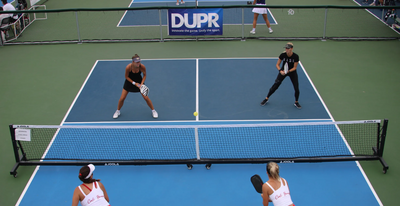
Play pickleball long enough and you'll start to see certain patterns emerge — both in your own game and that of your opponents. The sooner you recognize winning patterns and implement them into every point you play, the sooner you'll start to see that DUPR creep up. Here are three to start with.
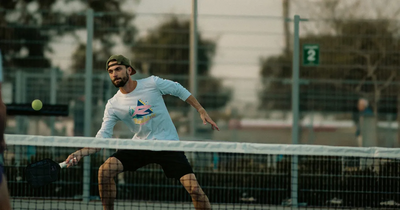
The moment your opponents see you lean back or look up, they're already retreating.
When your fourth player bails on pickleball night, most amateurs panic.
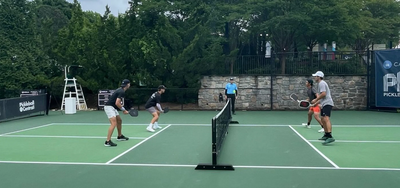
We’re going to let you in on a little secret: even the best pros in the world don’t hit perfect drops 100% of the time.
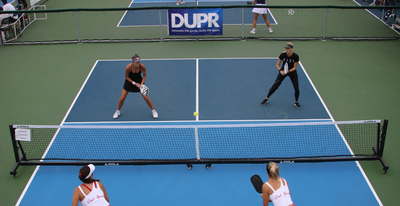
There’s a common misconception around practicing patience at the kitchen line. Most people think it means staying the course until your opponent makes a mistake. It doesn’t. That philosophy is passive. True patience in the midst of a dink rally is anything but.
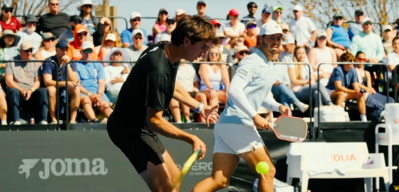
One of the fun parts about pickleball is the variety of scenarios that play out each and every game. No two points are ever the same. It's fun to think about what shot to hit and where you want the ball to land. But how closely should you be watching the ball all the way through contact?
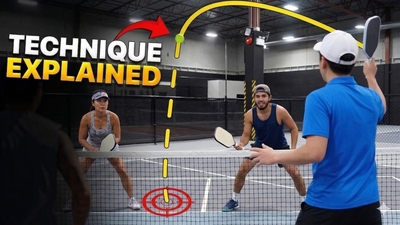
Instead of aimlessly hitting drop shots and wondering why you’re dumping so many into the net, take a step back and consider the root of your problem. That is, maybe you’re not thinking about the shot enough to begin with.
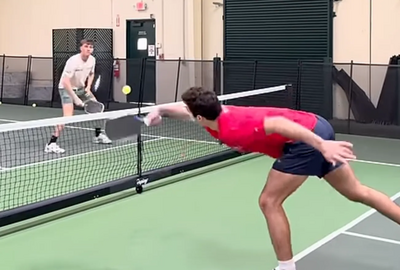
The bump is a shot you see in advanced pickleball a ton. It doesn't look like much, but it's highly effective for staying ahead of points and dictating pace of play on your own terms.
“If you believe your drop, drive, or drip will reach your opponents’ feet and they’ll have to hit up on the next shot, that is a good indicator that you may get an opportunity to move forward and attack the next ball from the transition zone.”
We talk a lot about how to break the 4.0 plateau. But what if you’re not quite there yet? For anyone grinding at more intermediate levels, here are a few solid tips that’ll help take your game up a notch.
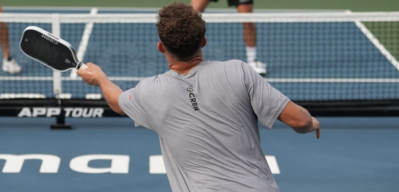
There’s a sinking feeling that comes from seeing an opponent set up to take a monster hack at a slice return. We’ve all been there. Hit correctly, this shot can present a rash of problems. It’s hard to drop and easy to pop up. So what do you do?
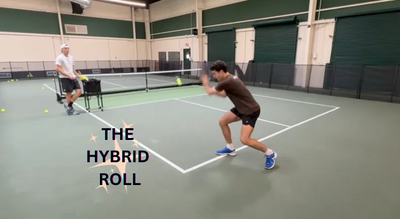
Here’s the stone-cold truth about advanced pickleball in 2026: you can survive using the same bag of shots you’ve relied on for years. But to thrive, to dictate points and win high-level games, you need to improve your skills and add new shots. All the time. Take this one, for example: The aggressive third-shot roll drop.
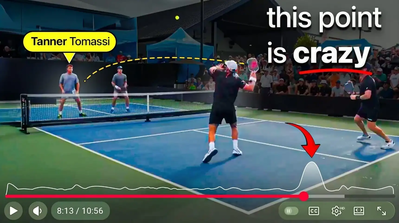
Kyle Koszuta had a big 2025 on the APP Tour. So big, the dude just announced a new paddle deal with Friday Pickleball. In a new video, he gave some illuminating advice on how he was able to go so deep in so many big tournaments.
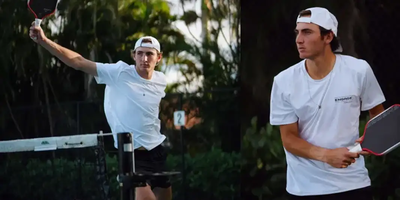
There are few PPA pros playing with more confidence right now than Eric Oncins. Coming off a stellar 2025 season, it’s no wonder he’s a nominee for The 120/Life Dink Awards Breakout Player of the Year. So when he hits a court with APP standout Tanner Tomassi to talk speeding up off the bounce, you best listen.
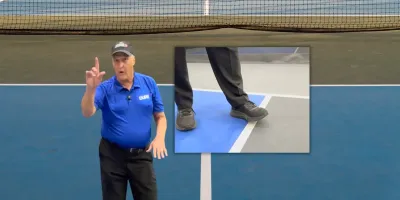
Pickleball rules are full of quirks. And no technicality causes more tiffs or challenges than the “re-establishment” rule. Pros hate getting called for it. You’re probably not getting called for it enough.
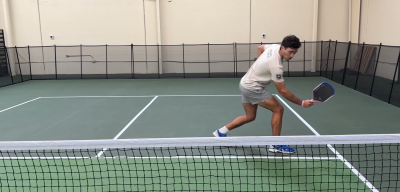
Ever notice how the pros make the game look like it’s moving at .5 speed? There’s nothing slow about their play; they’ve just mastered a principle that puts them one step ahead on nearly every shot. It’s called “cornering the ball” — and it’s the difference between hitting measured, intentional shots at the kitchen line and reaching to stab at that inevitable pop-up.
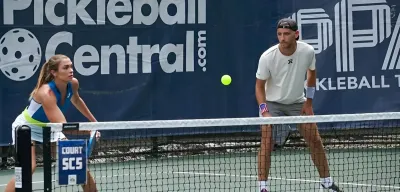
Knowing when to attack at the kitchen line is a critical skill as you face better and better opponents. But knowing where to attack is what separates good attempts from points scored. PPA pro Eric Roddy is an assassin in the short game. It’s not because he’s the most skilled or powerful player out there; it’s because he knows when to go on offense — and how to hit every shot with intention.
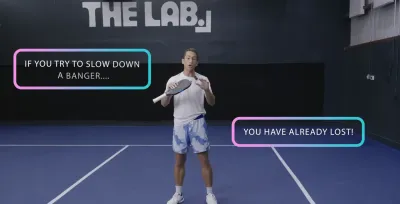
Unless you’re new here, you should already know the golden rule for beating bangers at their own game: use their power against them. Zane Navratil doubles down on this mantra in a new video, stressing the point to the max: "If you start out with the mentality of slowing down the banger, you've already lost to the banger."

If you’re the type of player who constantly hits speed-ups off your shoelaces or keeps trying to make the third-shot lob a thing, well… we can’t help you. Do better. But if you’re like most of us and occasionally find yourself swinging for a miracle when a simple dink or reset would do, there’s a pretty simple fix for that.
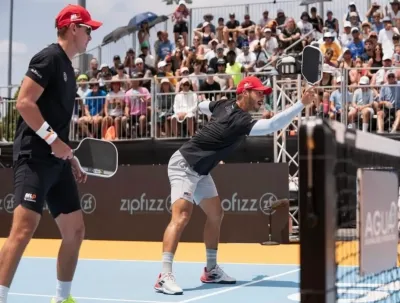
When it comes to technique and strategy, Collin is the absolute GOAT. And he just dropped this nugget of wisdom on our third-shot choices. Firstly, when you’re about to rip a third-shot drive, what’s going through your head? You’re probably thinking winner, winner, chicken dinner, right? WRONG! (says Collin).
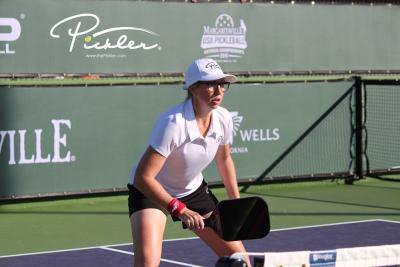
Before mastering volleys or working the angles, you need a solid foundation — your ready position. The right stance at the kitchen line determines how quickly you react, how efficiently you move, and how well you control each exchange.
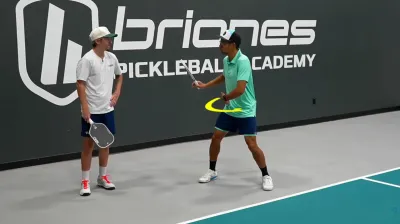
You’re spending hours trying to add steam to your forehand drive, but guess what? You’ve been chasing the wrong things. It’s not your swing, says Briones Pickleball, or your follow-through, or even your grip first. It’s your hips that make all the difference.
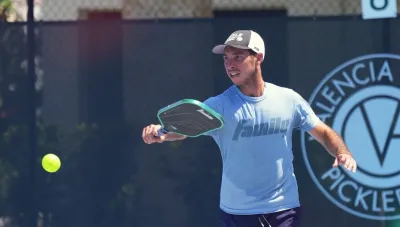
Ever have one of those days where you’re getting absolutely lit up at the kitchen line? Where one player in particular seems to have your number and every hands battle goes his way? Us too. And it got us thinking.
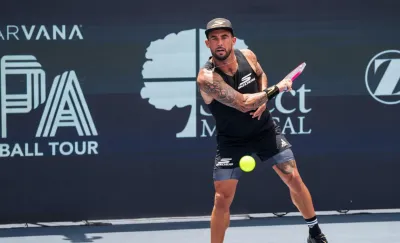
Conventional pickleball wisdom dictates you play soft to get yourself out of hot water. Like when you’re deep behind the baseline, hitting off your back foot, for example. Drop until you can work your way in, right? Wrong, says Tyson McGuffin.
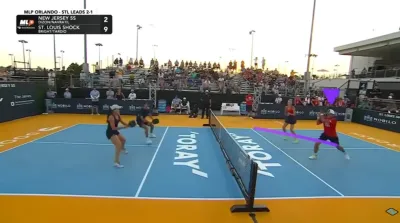
Shot selection is everything in competitive pickleball, especially at the kitchen line when points can move very fast and your reaction time is reduced to milliseconds. Things get even more complex on the backhand side.

Most recreational players think aggressive dinking means hitting hard, but James Ignatowich insists it's actually about placement and timing.
After coaching hundreds of players, and competing in countless pro tournaments, Ignatowich has identified the most common mistakes that hold players back from taking control at the kitchen line.
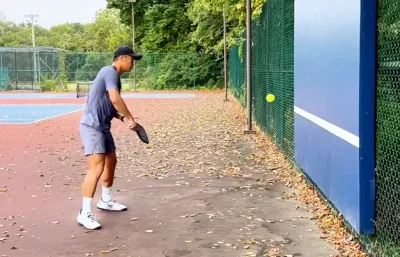
When you boil it right down, pickleball is really a game of a few critical shots. Sure, a blistering drive can come in handy. And a feathery topspin lob? Just delightful.
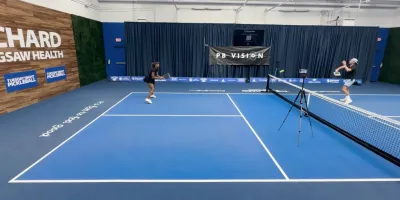
There’s a moment in every pickleball game, sometimes several, where a shot leaves you or your partner in a bad situation. It’s often when everyone is jockeying for position at the kitchen — a firefight goes bad and all of a sudden your opponent is 14 feet away, paddle cocked back, about to destroy a ball you just popped up by accident.
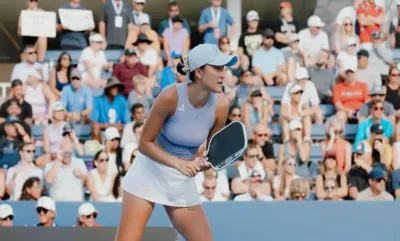
“Elongated” paddles have become the default shape in pickleball, the shape you see most of your friends playing with, the shape most pros play with, probably even the shape YOU play with. But there is a better option for the vast majority of players!
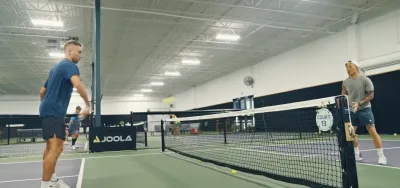
Zane Navratil wants you to loosen up. Or maybe tighten up? Allow us to explain. When it comes to fast hands at the kitchen line, he’s a big proponent of “The Coil Method.” By rotating your upper body as one unit, rather than standing stiff and just frantically swinging your paddle arm, you give yourself valuable extra range of motion to reload and counter-attack.
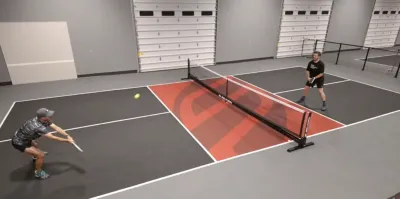
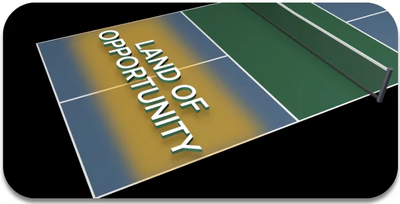
We’ve said it once, and we’ll say it again: Players who thrive in the transition zone are the toughest ones to beat. Selkirk pro Mark Price puts it this way: “It’s not no man’s land, it’s the land of opportunity.” His simple drill may be called the “Unfair Drill,” but it’ll have you resetting like it’s second nature in no time.
You know that feeling when you flinch during a speed-up? Or reach to defend the same crosscourt dink over and over, and pop it up every time? That’s not just a weak spot in your game. That’s panic, the pickleball kiss of death if you ask Anna Bright. In her latest newsletter and blog post (if you don’t subscribe yet, you really should), she shares a few pearls of wisdom for remaining calm in the face of adversity.
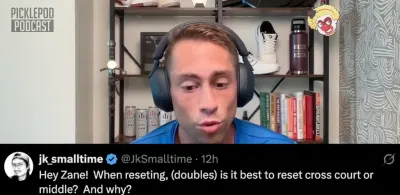
During a PicklePod Q&A session, Zane was asked about the best location to reset, cross-court or middle? He’s fine with it from the transition zone. But “from the kitchen line, never reset. Stop resetting. Resetting is crushing your game. You should just counter-attack instead.”
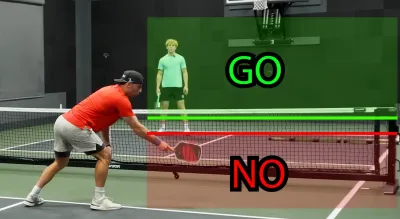
That stat comes from Kyle “That Pickleball Guy” Koszuta. And while we can’t verify its accuracy 100%, it does make sense anecdotally. Extended rallies are the exception in most rec play, not the rule.
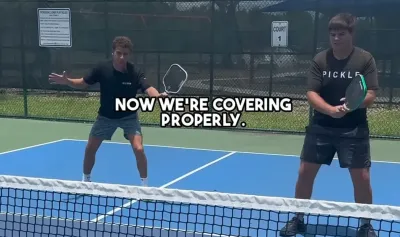
Here’s a quick but useful tip to bring into your weekend matches and beyond. It’s called “The Rope Rule.” After every serve return, your goal should be to get to the kitchen line as quickly and efficiently as possible, right?
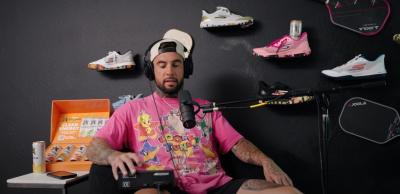
a recent video session, Tyson McGuffin explains why, as he breaks down a match he played with Lacy Schneemann against Gabe Tardio and Jessie Irvine. It was a battle, with neither team giving an inch. This approach helped Tyson and Lacy claw their way back against an ultra-aggressive opponent.
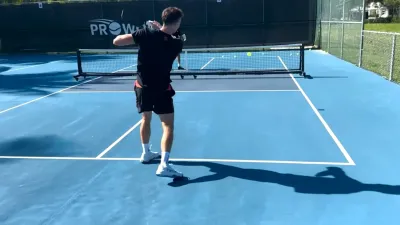
Grayson Goldin just signed a UPA contract and is already turning heads with his electric personality and inhuman power. Nobody is hitting the ball harder than Grayson right now. Just watch the first shot in this montage and tell us we’re wrong.
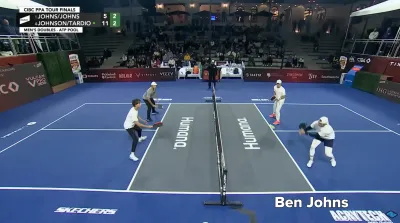
If you’ve ever wondered whether it’s time to perfect the twoey dink, let Zane Navratil put that to bed for you: “If you can’t hit a two-handed backhand dink, you’re not playing modern pickleball.” Dead dinks are the kiss of death these days, and simply playing defense at the kitchen line isn’t going to win you many games. It’s time to level up.
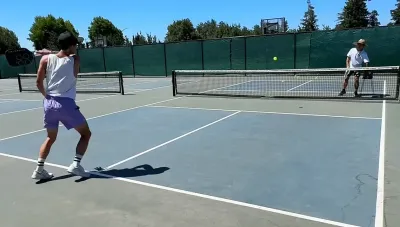
If you don’t come to pickleball from a different racket sport — say, tennis or badminton — the concept of spacing can be taken for granted. That is, the optimal distance from your body the ball should be to make contact for any given shot.
To get in the right headspace heading into the weekend, let’s focus on upping our mental game today, shall we? We’ve all experienced the paradox of pressure on the court. In rec games or even just warmups, it’s easy to play light and free and with a mental clarity that makes every point, win or loss, a delight.
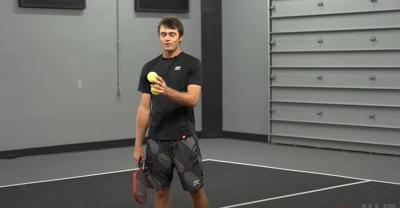
The next time you play, track how many times you hit a ball off the bounce with a one-handed backhand. Spoiler alert: It’s a lot. If you’re looking to dictate more points, you need to be speeding these up on the regular. To master the proper motion for executing the one-handed backhand flick, just imagine you’re throwing a frisbee.
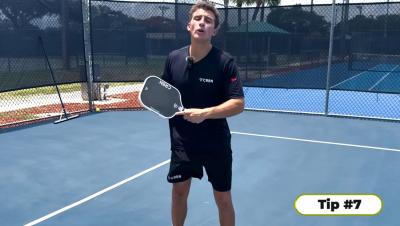
If you’re looking to break through that 5.0 plateau, the little things begin to matter more. Every shot needs to be sharper and hit with intention. To hack it at this level, simply “getting the ball back over” doesn’t cut it anymore.
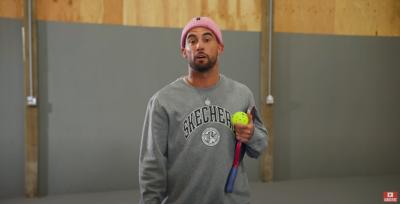
Once a novelty, the around the post (ATP) has become a routine shot in advanced pickleball games. And just like your drop and twoey roll dink, it’s a shot that should be drilled. When the time comes, you want to nail it.
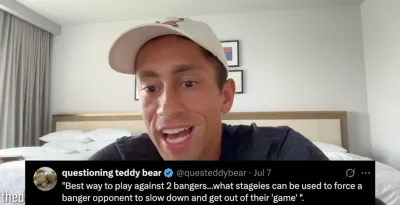
How do you quench the firepower of an opposing team with two bangers? That was one of the many questions Zane Navratil answered in this week’s PicklePod. And his answer might surprise you: You don’t.
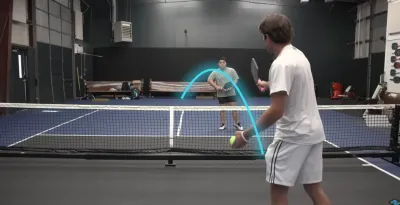
Just because you’re right-handed and find yourself on the right side doesn’t mean you’re in a beta position. Being aggressive from here comes down to patterns and strategy. You’ve got more weapons than you might think.
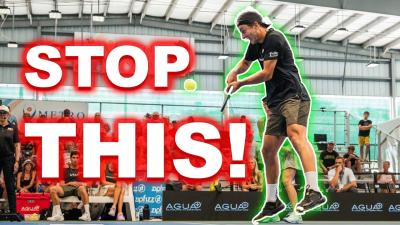
Play enough pickleball and you’ll start to develop habits. Some, like varying your serves or knowing which way to pivot to defend a lob, are good. Others, not so much. Pro Connor Garnett is here to call out four common pitfalls seen in intermediate to advanced players and, better yet, how to correct them. Sit back and take notes, the king of Twoey Nation is talking.
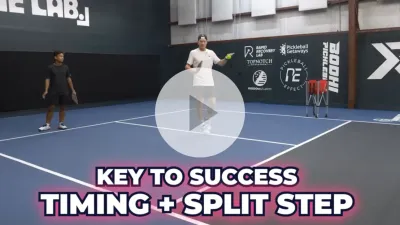
The poach shot in pickleball is effective because it breaks patterns and disrupts the regular flow of a point. Timed properly, it can shake your opponent’s confidence, keep them guessing and more defensive, and shrink the game at the kitchen line. (No wonder Zane Navratil is a big fan.)
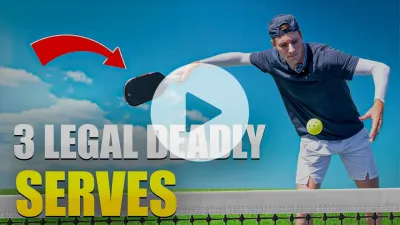
Just like your thirds or dinks at the kitchen line, the foundation of winning pickleball strategy is variation. Hit the same shot over and over and any good opponent will catch on and capitalize. Mix things up, though, and you’re in the driver’s seat.
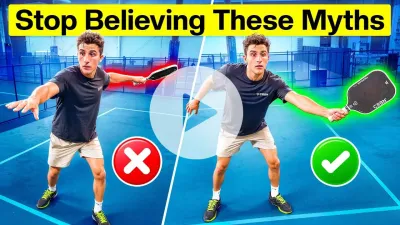
Pickleball strategy is like the weather in New England: Not a fan? Just wait five minutes.
Strategy fundamentals that were gospel when you first started probably aren’t as relevant anymore. Some, believe it or not, are totally outdated. Allow us to catch you up to speed with the help of pro Tanner Tomassi.
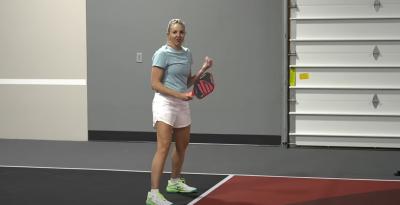
Like most winning shots in pickleball, effectively (and safely) chasing down a lob is all about patterns. First, you need to recognize and communicate whose ball it is, then it’s a game of footwork. Resist the urge to rush and focus on a quality return. Susannah Barr shows the way:
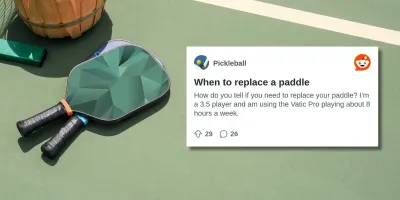
It’s no surprise that pros rip through paddles like crazy — some, like Quang Duong, are lucky to get a full week out of one paddle before needing a fresh replacement.
For us mere mortals, the active lifespan of a pickleball paddle is considerably longer. But at some point, old faithful will feel tired and it’ll be time for an upgrade.
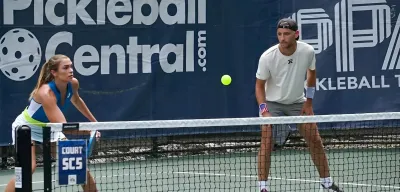
Play pickleball long enough and you’ll find yourself teamed up with a considerably weaker partner. We’ve all been there, gritting our teeth as Larry dumps yet another sitter into the middle of the net.
As you become a more advanced pickleball player, details start to matter. Minor tweaks in your game can translate to noticeable performance upgrades. It’s time to sweat the small stuff.
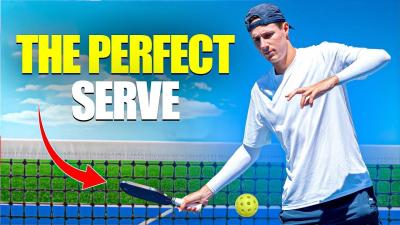
Watch any top pro serve. Now watch them again. Notice anything? They repeat the exact same motions, down to the breath, every time. Peak performance is all about consistency. Roscoe Bellamy is no exception. The former UCLA and pro tennis player is now making his 6’ 5” presence known in pro pickleball, largely in the form of a formidable forehand and monster serve.
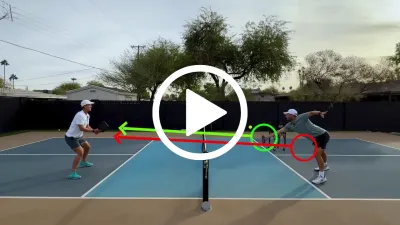
Augie Ge is an MLP champ known for his cerebral approach to the sport. The crafty lefty is a master at decoding when to play it safe and when to get aggressive. Here, he hits the court with fellow pro Kyle Koszuta to detail their “3-Part Kitchen Formula” for better decision-making when attacking at the kitchen line.
Advanced pickleball play is often synonymous with speed, power and aggression—the higher your DUPR, the harder you can hit the ball. But that doesn’t have to be the case. There are plenty of pros whose game is more defensive than offensive—think Augie Ge or Tyra Black. Their secret is knowing when to attack.
If you want to get better at pickleball, you need to start paying attention to strategy. That means recognizing and exploiting patterns that play to your strengths.
Playing in windy conditions is a frustrating but inevitable reality for any pickleballer. Mother Nature is a fickle beast, as they say—and a well-timed gust can make even the most seasoned pro look like a total noob. You can’t change the wind, but you can make some adjustments to give yourself a fighting chance. Here, pro James Ignatowich walks you through the tips he’s picked up throughout his career.
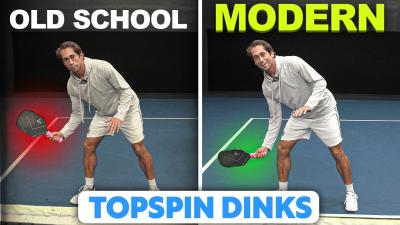
Dead dinks are the kiss of death. As your DUPR increases, so does the need for a more aggressive dink option from the Kitchen line. That’s where the forehand topspin dink comes in.
It’s the shot you should have on autopilot—just the right amount of consistency, offense and aggression.
If you stopped reading at “singles,” we get it—most people stick to doubles and assume any singles-specific strategy is a waste of time. Way too much running. No thank you. But wait. Selkirk pro—and new teammate to Rachel Rohrabacher—Catherine Parenteau knows a thing or two about winning: she’s ranked #7 in singles and #2 in women’s doubles on the PPA Tour.
The drop shot is one of the most important shots in pickleball because it allows you go from the baseline to the kitchen line, which is the best and most advantageous to play. Learn about the mistakes that are killing your pickleball third shot drop, including which partner should hit this shot, planting your feet on the return of serve, and how to know if it’s time to make your way to the kitchen line. Plus, learn about the “Traffic Light” system to tell you how to hit the 3rd shot and practice a pickleball drill to improve your drop shots during your next pickleball game.
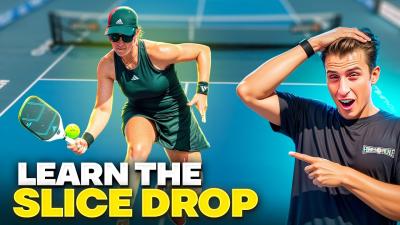
Ask three people for advice on the best third shot option in pickleball and you’re bound to get three different answers. Here’s a truth-bomb from Mari Humberg to try on for size: The best third shot is the one you can consistently get over the net.
Anytime Anna Leigh Waters wants to give a bunch of free pickleball advice, you know we’re locking in.
In a new video, she discusses a bread-and-butter shot that really got us thinking: On a forehand, instead of following through across your body to the opposite shoulder—follow through up and above your paddle arm.
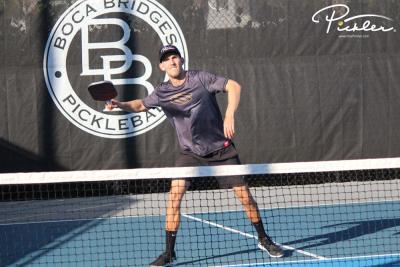
FYI- this is a very high difficulty shot that only 5.5 players and above can hit consistently, but we thought all of our players will find it interesting even though it’s not a shot than can be mastered without a lot of practice. Still fun to try when you’re drilling if nothing else but to further appreciate the subtle skills the pros possess. Needless to say, they don’t play the same game we mortals do.
Statistically, pro doubles matches are getting shorter. Looking at more than 40,000 shots across 4,000 rallies in gold medal matches in 2024, the average number of shots per point dropped from 11 to 10 compared to the year prior.
Sometimes it’s less about technique and more about mirroring the best players in the world.
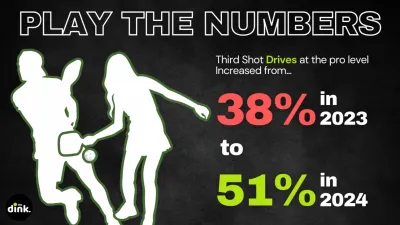
According to PPA Tour data, third shot drives increased from 38% in 2023 to 51% in 2024, showing a clear shift among pro players toward a more aggressive approach shot.
Imagine this: You’ve made it to the kitchen line only to find yourself fighting for your life against a couple bangers. Every ball is coming back at a blistering pace. You’re hanging on for dear life.
Selkirk pro James Ignatowich has conquered his fair share of firefights. Rather than matching power with power, he recommends neutralizing the aggression with a quick but poppy punch volley.
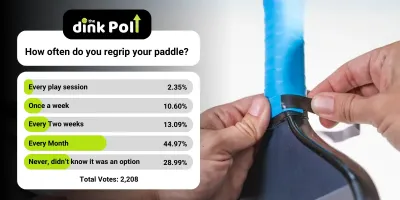
Changing the grip on your paddle can be like changing the tires on your car: It’s not something you think too much about until something just doesn’t feel right.
To test this theory, we wanted to know how often our readers change their paddle overgrips.
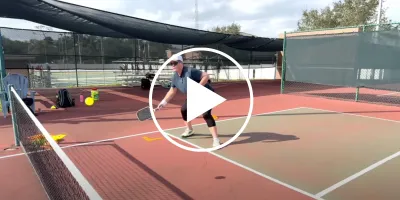
When it comes to cross-court dinking, we all want to be more aggressive at the kitchen line. But where to start?
Recent MLP Florida Smash draftee and Managing Director of PPR Sarah Ansboury has played thousands more hours of pickleball than you have. So listen up.
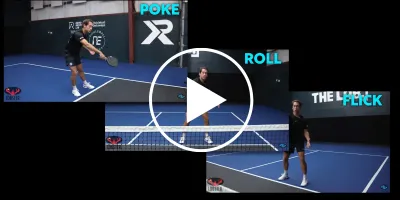
Not all backhand attacks are created equal. If you’ve been using the terms poke, roll, and flick interchangeably, it’s time for Zane Navratil to set the record straight. Each shot serves a unique purpose and can be a game-changer when used correctly.
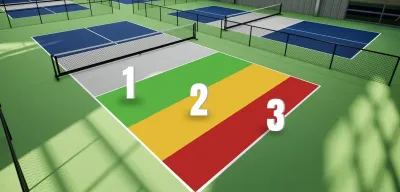
“One of the biggest mistakes I see amateur players make, especially those lower in rating, is poor decision-making from the baseline.” Pro player Eric Roddy. As a pro player, Eric Roddy divides the pickleball court into three separate zones based on his likelihood of attack. In Zone 1he has the green light to pull the trigger, but in Zone 3 he knows that an attack is a low percentage play.
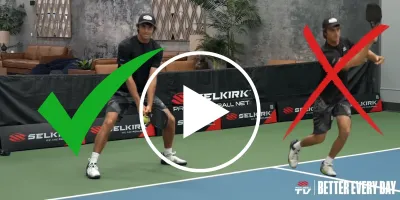
The serve is no longer just a way to start a point. It’s an offensive weapon that can be used to win a point.
In a new video, James Ignatowich provides instructions on how to defend yourself against big serves.
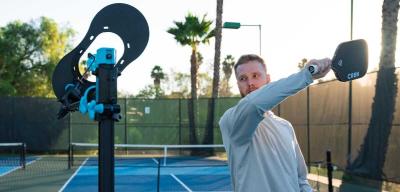
Adding topspin to your pickleball game keeps opponents on their back foot and improves shot consistency. By brushing upward on the back of the ball, topspin creates a forward spin that causes the ball to dip quickly into the court, letting you hit harder while staying in bounds.
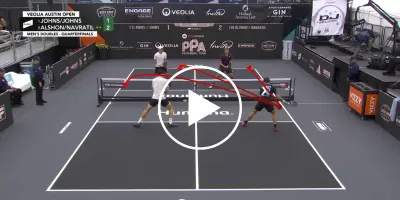
One of the commonly accepted beliefs in pickleball is that having two forehands in the middle is the best alignment for a team. A righty-lefty team where both partners could have their strength in the center of the court.
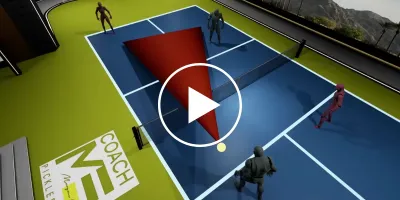
As the serving team, your goal is to reach the kitchen line quickly to neutralize the point. That, however, does not give you permission to sprint to the line with reckless abandon. Your approach should be strategic. It depends and multiple factors including the quality of the third shot, placement of the third shot, and your partner’s willingness to move forward.
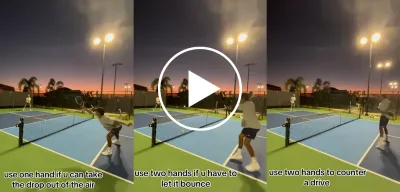
If you’re not using two hands on your backhand, then the game might be passing you by. Many pros and high-level players use two hands to add power and stability to their backhand shots. But how do you decide when to add that second hand?
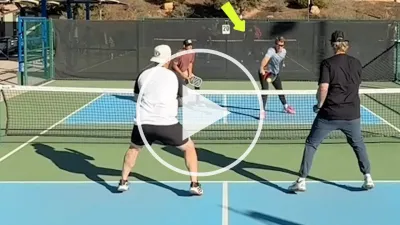
Pickleball is evolving into a faster-paced game that emphasizes offense over the traditional soft game. While the soft game is still an important tool, it’s no longer the cornerstone of winning strategies.
A new video from the Pickleball Playbook explains how players can embrace modern techniques and adjust their approach to have a significant edge in 2025 and beyond. Here’s how you can stay ahead:
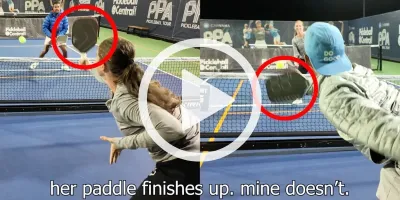
Mari Humberg broke out onto the pro scene in 2024. One of the biggest reasons for her success is her killer backhand flick.
In this instructional video from Ed Ju, Mari Humberg shares expert insights into her signature backhand flick, a deceptive and effective shot. Key takeaways include:
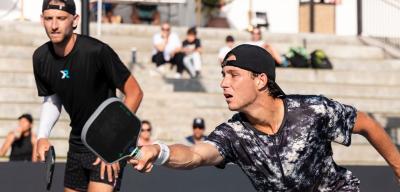
Coming off a paddle rack cold and only having a 30-second warm-up for a challenge court can be a recipe for disaster. Fortunately, top 20 PPA Pro Eric Roddy shared with us some strategic advice on how to start your games off the right way to maximize your chances of winning.
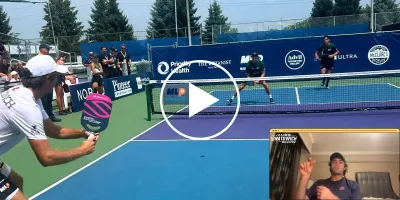
In pickleball, knowing when to hit a topspin drop versus a slice drop can make a big difference in your control and strategy on the court. Here’s a quick guide – with tips from Selkirk pro James Ignatowich – to help you decide when to use each shot and tips for executing them effectively.
Your serve is one of the most underrated and overlooked aspects in pickleball. A strong serve can lead to easy thirds and make the rest of your skillset irrelevant. A new video from Austin at the Pickleball Playbook offers a ton of tips to improve your serve. Let’s look at a few tips varying in level of difficulty.
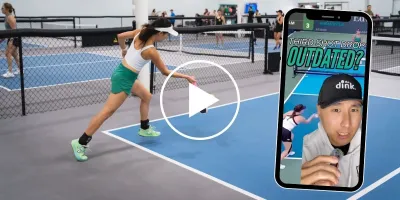
The third shot drop is widely referred to as the hardest shot in pickleball. If it’s hit too high it’s smashed for a putaway. A little too low, and it’s straight into the net.
Senior Pro Dayne Gingrich argues that the time to prioritize the third shot drop has come and gone. He says “The 3rd shot drop should be put on the back shelf and only used when absolutely necessary. The drive/drop combo is a much better play for all levels.”
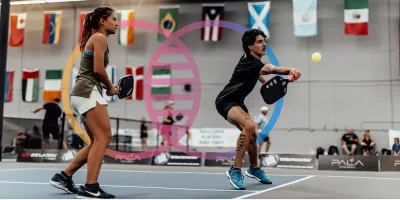
The forehand takes the middle. It’s a solid rule that should be adhered to MOST of the time.
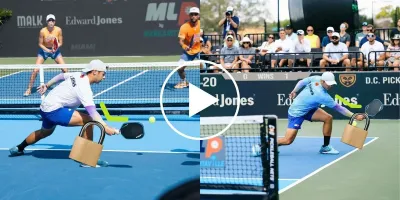
Ben Johns is known for making the impossible possible on the pickleball court. But what might be more impressive is his consistency in maintaining his status at the top of the game month after month. On the PicklePod, Johns identified a major mistake that is detrimental to the consistency of amateur players: trying to control or add to your shot with wrist movement.
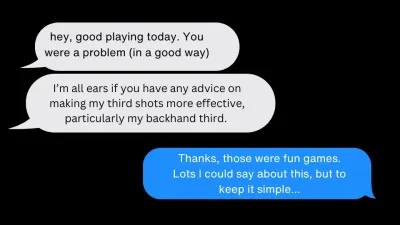
It’s always nice when your opponent compliments you after a game. It’s even sweeter when they ask for your advice. Here was mine to this person asking about improving their backhand third shot:
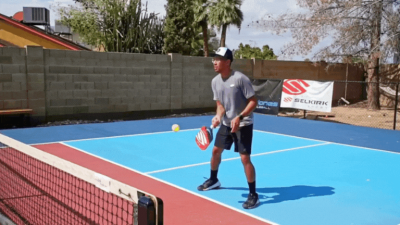
A consistent ready position is a hallmark of top-level pickleball players. It enables them to react quickly and easily handle fast-paced exchanges. But many players overlook this crucial habit, leaving them vulnerable. Let’s explore what players get right and where they go wrong when maintaining a strong ready position. Here's what Selkirk-sponsored pickleball instructor Jordan Briones has to say.
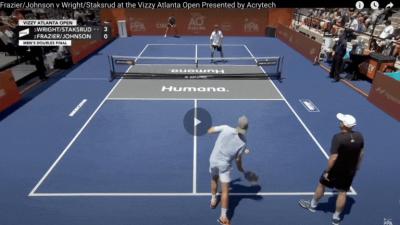
A key trait of advanced pickleball players is their ability to use patterns to control a game. If you've ever wondered how some players always seem to be one step ahead, this Up Your Game is for you. We’ll break down three attacking patterns that top players rely on in nearly every match. Master these, and you’ll win more rallies and dominate your opponents.
There’s no doubt that the right-side player's role has changed. They can no longer sit back in a passive role. In order for the team to compete at the highest level, the right-side player needs to attack and be aggressive to create more offense. James Ignatowich dives deep into the intricacies of the doubles game in a new podcast episode. He says, “If the left-side player doesn’t have a strong two-handed backhand counter, you can pretty liberally speed it up down the line.”
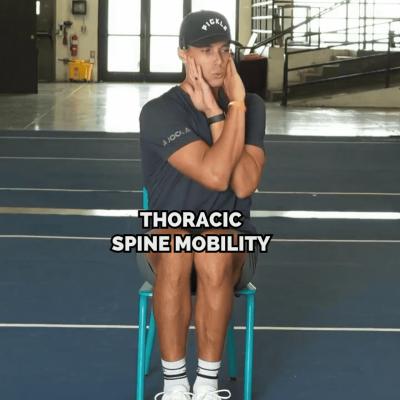
We all admire that smooth two-handed backhand dink James Ignatowich makes look effortless, right? Well, spoiler alert: waking up and whipping out ‘twoeys’ like James doesn’t just happen—it’s all about technique and training. If you’ve been wondering why your backhand dinks aren’t quite there yet, pickleball trainer Connor Derrickson has pinpointed three key areas you must work on. And no, it’s not just about hitting more balls.
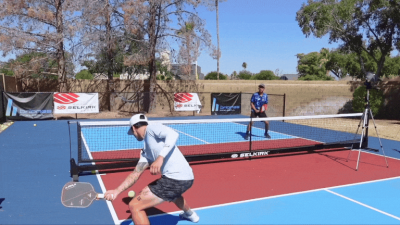
Mark Twain said, "The Reports of my death are greatly exaggerated." The same could be said about dinking in pickleball because if you were to watch any 4.0-5.0-level rec game, you’d think dinking is dead. However, analytics show dinks are still the most common shot hit in games. So, while dinking might be less popular than it was a few years ago, they’re still a massive part of the games we play daily.
Getting paired with a weaker player can be a helpless feeling. No matter what you do, that point always seems to end on their paddle. The other team notices and begins sending every ball their way. It is a challenging situation, but Zane Navratil has some tips to help you overcome a weaker partner and get the win.
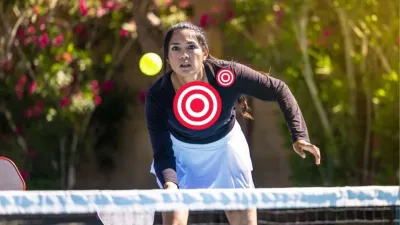
Where should you attack an opponent who is standing at the kitchen line? You're not wrong if you said the hip, shoulder, or right at their chest. But you’re also only half right.
The correct answer lies in your opponent’s paddle position. Here’s a quick breakdown of common paddle positions and where to aim your attack to be most effective.
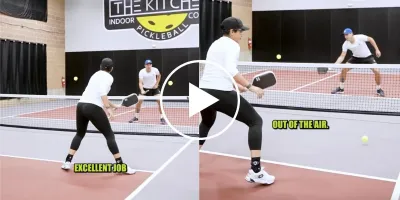
s your level of play rises, the pace of the game slows down. Those 4.0 games that used to seem fast and intense will become a walk in the park with predictable shots you know how to counter as you level up.
You will notice the difference if you move from a high-level game back down to a lower level. If high-level games aren’t at your disposal, you can use the two-ball drill to simulate high-speed play.
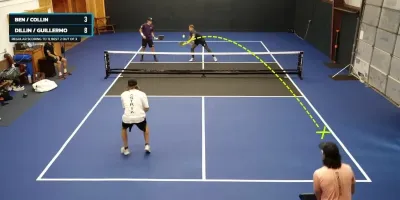
The roll volley is a shot somewhat unique to pickleball in the world of racquet sports. Most players coming from tennis are accustomed to slicing a volley as they close in on the net. In pickleball, the roll volley is a great option to thwart your opponent's attempts to advance forward in the court. It is also a valuable weapon to attack with while at the kitchen line.
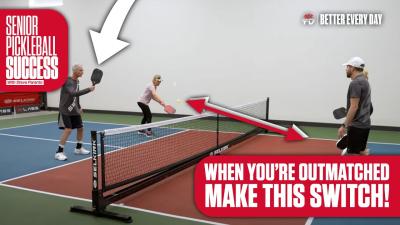
The game of pickleball gets younger every day. After you encounter some teenagers on the court you’ll notice one thing … they get to everything.
Youthful energy can be a superpower.
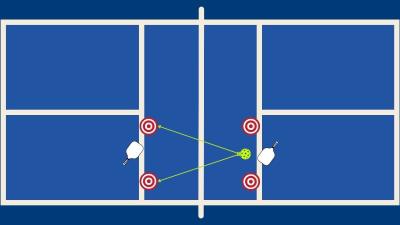
Here’s what to focus on if you want a two-handed backhand dink
One of the first things James emphasizes is the importance of using a cupping motion.
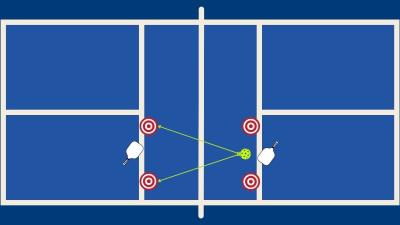
Most pickleball advice tells you how to attack or defend better. However, learning how to make yourself “unattackable” is just as important.
Here are a few ways.
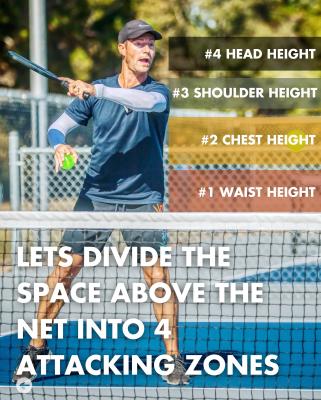
If a ball comes to you above net height it calls for an attack. However, not all attacks are built the same.
As Coach Mark Price says: “Often beginners and intermediate players go for TOO MUCH - TOO SOON. Misreading the ball trajectory or attacking a ball while still out of reach are common errors at lower levels.”
As more pickleball players come from tennis, serves are getting faster and more powerful. Naturally, this means if you want to compete, players need to develop a more effective return of serve.
According to Collin Shick, a top 20 Men's Singles player on the PPA Tour, there are three things to focus on if you want a great return of serve.
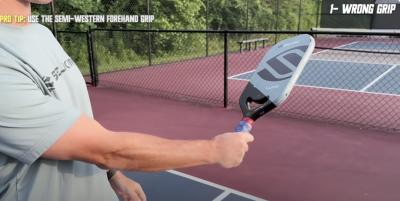
A semi-Western grip is also known as a pancake or frying pan grip. You can accomplish this by laying your paddle flat on the ground and picking it straight up, leaving the paddle face downward. Your index knuckle should be over the fourth bevel.
Grab a pickleball and head to the kitchen line. Your mission is simple: throw the ball so that it bounces at the opposing kitchen line. This drill might sound straightforward, but it's a great way to mimic the motion needed for a powerful overhead smash.

When teams are close in skill level, who wins and who loses can come down to which team plays more high-percentage shots or puts itself in better situations more often. When you’re playing a team that’s equal or better than you, you can win more often by forcing your opponents to repeatedly hit the more difficult shot throughout the match.
What’s the ideal paddle-ready position? Take a moment. Do you know? Maybe you said, “Slightly backhand” or “Paddle straight up and down.” While these are great answers when standing neutral, the ideal ready position depends on where the ball is on the court.
In a recent podcast episode, James Ignatowich discusses his experience playing on the right side with Ben Johns at PPA Sacramento.
He says he learned a lot about playing that side – typically, he plays on the left in doubles – including how challenging it is for a right-side player to be aggressive on a ball that bounces in front of their inside (left) foot.
Many pickleball players start their matches slowly, whether it’s due to nerves, jitters, or a lack of a proper warmup. This slow start leads to them being out of position, making poor drops and allowing their opponents to start with a seemingly insurmountable lead.
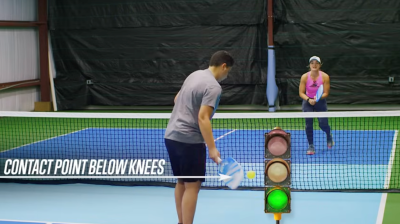
A massive differentiator between 4.0s and 5.0+ players is how they play through the transition zone. Lower-level players tend to be aggressive when they shouldn’t, while higher-level players understand to look for specific tells to know they have the green light to attack.
Your left foot is one of your biggest vulnerabilities on the court. A ball down there is impossible to attack and easy to make a mistake with. If you watch the pro game you will see dink after dink hit to the left foot of the right-sided player. It is one of the safer and more effective spots to hit a dink.
In tennis, an overhead from the frontcourt is a point-ender. In pickleball, not so much. It may take 5, 6, 7 overheads to win a point. Sometimes that’s not even enough, and you’re left with a ball in the net and a really sore shoulder.
Tennis players have an inherent advantage when it comes to playing pickleball for the first time. But not every racquet skill is applicable on the short court.
The biggest key when returning a serve is to keep it deep. Keep the other team back to maintain your positional advantage.
1. One of the most popular spots on the court to send the return is down the middle. Not exactly on the ‘T’, however, it’s a good idea to aim just to the left of the ‘T’, (assuming both opponents are right-handed).
One of the biggest gaps in strategy and technique between 4.0- and 5.0-level players is that 5.0s can execute strong fourth (and sixth) shots that keep their opponents back off the kitchen line.
We all have blind spots in our games and sometimes make mistakes we don’t even know we’re making. That’s why you subscribe to The Dink.
Here are five huge mistakes you’re making on the courts without even knowing it:

The pro pickleball game is becoming faster and faster, and third-shot drops are becoming less common. On the PicklePod, pro Zane Navratil admitted that he drops the ball about “zero percent” of the time.
Instead, he focuses on hybrid drop/drives (about 40 percent of the time) and drives (about 60 percent of the time).
If you are an avid pickleball player, odds are you have played a competitive game of some sort, whether it’s a local moneyball, a charity event, or even a PPA or APP-sanctioned tournament.
If you haven’t, maybe you are starting to consider it.
PicklePod co-host Zane Navratil has hit a million dinks in practice so you don’t have to. He provides a shortcut to the lessons learned on his journey here:
1. Ready Position
When training, Zane suggests holding a ball in your off-hand to make sure you come back to ready position between shots.
A paddle eraser a handy tool to help you keep your pickleball paddle clean of debris, ensuring better contact between the ball and the paddle during your games. We'll unravel the mystery of the pickleball paddle eraser, explaining how to use it, how it is made, and whether it's safe to use repeatedly on your pickleball paddles.
Kitchen violations happen constantly in pickleball. Everyone steps on the line at one point or another, but somehow no one believes they’re ever guilty. It’s a weird phenomenon where by the time your eyes look down at your shoe, it’s magically slid backward off of the line and provided justification for your defense.
One of the most important and difficult shots in pickleball is resetting the ball from the midcourt. It must be executed to near perfection, otherwise your opponents will be able to continue to attack you and keep you from the kitchen. Being able to hit consistent resetting drops from the midcourt is a crucial skill to have when progressing up the pickleball ratings ladder.
Pickleball partnerships commonly lead to friendships, unless you’re the player constantly responsible for getting your partner bodybagged. Once or twice in a game is alright but three, four, or five is a good way to make sure you two never partner up again. The most common scenario for this pickle faux pas is while cross-court dinking.
By this point in your pickleball journey landing a successful dink should be quite easy. An area where you might still be having trouble is landing third shots with the same consistency as pros. Ultimately, a drop from the baseline is theoretically the same as a dink. Your stroke should look the same for a drop.
Chemistry plays a major part in the success of a doubles team. Two less-skilled players who work together can beat two highly-skilled players who don’t mesh on the court.
There are plenty of things you can do to help build chemistry with another player.
You're in a dink war. The temptation to up the ante on each shot is great. You push yourself to the brink of the dink (pace, spin, angles), hoping your opponent will fold. It's a matter of pride. A battle of ego. The message: 'I can out-dink you all - day - long buddy.' But every time you up the ante, you up the risk. Your pride left the back door open, and in comes unforced errors.
Have you reached a plateau? Think your game is as good as it's going to get?
Here are the best tips for moving past the 4.0 plateau.
1. Use the drive as a situational third shot, not necessarily your “go-to”
Listen, I love to drive as much as the next guy. A player with a killer drive can be almost impossible to stop when they are hot...
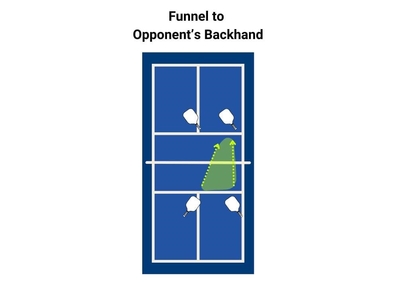
A lefty-righty partnership is considered the future of pickleball. The big advantage comes in having two forehands in the middle, where most balls are hit. Now we'll examine what makes a lefty-righty partnership so special and provide some strategies for taking advantage of it.
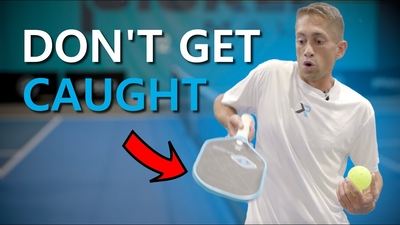
The ready position is a boring topic, but do you know what's not boring? Winning points. To win more points, you need to be better with your ready position.
In particular, we’re talking ready position at the kitchen line. When you have less than a second to react, it’s a necessity to return to the right ready position every shot.
If so, you might be falling victim to five common mistakes that help you lose pickleball games instead of win them.
1. Your fifth shot from the mid-court
Charging in after your third puts you in a vulnerable spot for your fifth. Too often players are caught on the move and make a mistake on their fifth.
While we know pickleball to be a fairly laid-back scene on the recreational side, rec play is just like any other scene: there are unspoken rules you should probably follow. So whether you’re new to the game or think you’re experienced enough to know everything about it (spoiler: you’re not), here are some of the “rules” of rec pickleball at most local courts:
If your coach gives you any of the following advice, it’s time to upgrade.
This tip can be counterintuitive. Sure, you don’t want to play into their strengths, but you can’t try to reset and slow down every one of their speedups. The reset is a difficult shot and doesn’t punish your opponent. You’re better off hitting a counterattack to capitalize on their aggressive play.
For beginners entering the world of pickleball, speed training might seem like a daunting endeavor. However, building a foundation for speed is a gradual process that combines specific exercises with an understanding of body mechanics.
Pickleball, a sport that demands quick reflexes, agile movements, and lightning-fast reactions, places a premium on speed. Whether you're a beginner looking to enhance your first step or an experienced player aiming to accelerate your game, speed training is the key – but it should go beyond simple things like wall drills.
One of the favorite theories floating around the rec courts these days is called the “Triangle Rule.” The rule applies to speedups against your opponent at the kitchen line. It’s used to predict their reaction to your speedup. You’ve probably heard this one before or noticed it yourself; a speedup down the line is likely going to be countered to the middle.
Here is why you should be sending your thirds cross-court.
More margin for error
Aiming cross-court allows more margin for error. The safe zone for landing a drop in the kitchen becomes much larger when aiming cross-court.
Court position is the biggest advantage in pickleball. When you’re at the kitchen line at your opponent is stuck at the baseline, you have the advantage.
To keep that advantage, your volleys have to be a threat. But not all volleys are the same. The contact height determines how aggressive you can be with your shot.
Start at the baseline and have your partner stand opposite from you down the line at the Kitchen. Your partner will feed the ball to you, and your goal is to hit as many shots as it takes for you to get to the Kitchen. Once you reach the Kitchen, play the point out down the line. You can keep score and play games to 7 or 11, and then switch roles with your partner.
The third shot drop carries a lot of weight in the game of pickleball. It’s the key to neutralizing the returning team’s advantage and advancing towards the NVZ.
Building on our recent discussion about the critical role of swing weight in pickleball paddles, let's delve into the key factors that contribute to this dynamic element. Understanding these nuances can significantly impact your gameplay.
As enthusiasts of the game, we understand the importance of selecting the right equipment to enhance our performance on the pickleball court. Today, I'd like to shed light on a crucial aspect of pickleball paddles—swing weight.
Letting out balls go is an underrated, and acquired skill. It’s not always easy.
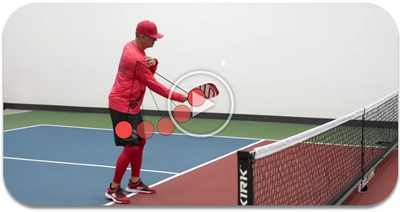
Watching dink battles can feel like watching paint dry. Two players trading unattackable shots are unlikely to make any highlight reel.
But for the players on the court, there is more at play than meets the eye.
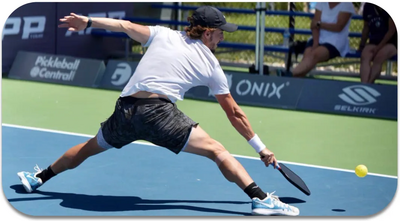
How do you know if someone is savage when visiting new courts?
A good signal to look for is a strong transition backhand volley.
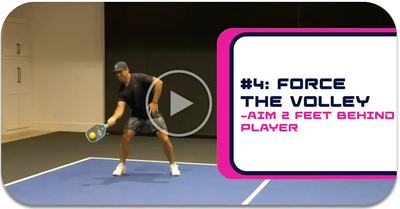
Last week, we covered two 4th shot fundamentals.
This week, we’ve got the final two tips to help convert your fourths into sideouts and get the ball back in your hands.
The fourth shot is one of the reasons people love pickleball. It’s your chance to be a superstar.
Beginning pickleball players only care about one thing: hitting the ball in bounds. As we progress, we want to do more and more with our game, and we want to score more often. Maybe we even start practicing shots.
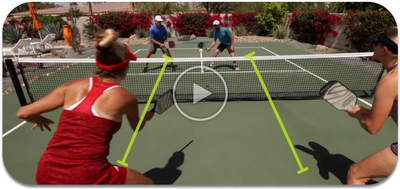
Moving with your partner is a crucial part of pickleball. The old adage “Down the middle solves the riddle” is popular because it is true. Creating a gap between players and then exploiting the gap is one of the best ways to win a point.
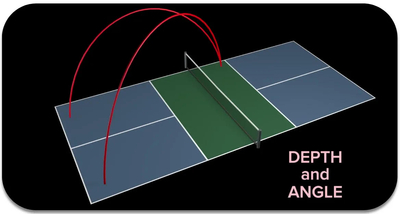
One of the most panic-inducing moments in pickleball occurs when you see a lob floating overhead and out of reach.
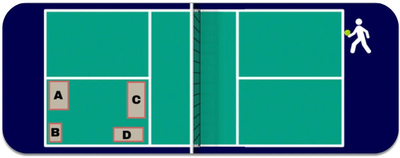
The MLB World Series begins tonight between the Arizona Diamondbacks and Texas Rangers (as opposed to the MLP’s Drive and Ranchers). In honor of the October Classic, we’re dusting off a baseball-themed tip to help your serve.
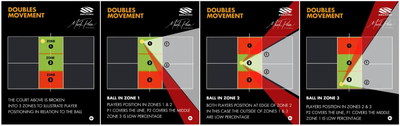
For those of us who are visual learners, here is a series of graphics to visualize optimal court coverage.
You’ve heard it a million times: “Partners should move like they’re connected with a string.” Well, here you can see why that is important.
In pickleball, both blocking and counterattacking are strategies typically used when you are playing at or near the Kitchen line, and your opponents are hitting a hard shot at you. However, they differ in their execution and intent.
By now you should know the slinky drill is the best use of time before a match. It helps you lock in your drops at different depths in the court.
When you hit a third shot drop, do you know it’s good as soon as it leaves your paddle?
If you’re like most of us, you probably need a little feedback from your opponent to know it’s safe to come forward.
A recent trip out to the court with some beginners reminded me of an easy tip to improve your game: keep the ball in front.
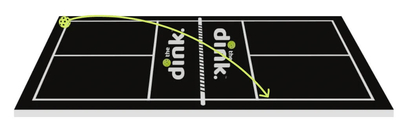
Everybody loves ripping a powerful serve at their opponents. It's your chance to start the point and dictate the pace.
Generating power in pickleball is all about managing space — specifically, the space between you and the ball. Ideally, you want the ball to be at arm’s length to maximize your power.
The decision to hit the ball out of the air vs off the bounce is a core tenant of pickleball. Forcing the opponent to make the wrong decision is one of the quickest ways to win a point.
We covered the three states of pickleball in our last blog post. Now, let's go over how to react in these scenarios.
Knowing who controls the point dictates how you should prepare for your next shot. A transition from defense to offense can happen in a split second. Below are the three states of pickleball.
Here are the examples to identify if you’re on offense, defense, or in a neutral state.
So here’s the thing. Even the most experienced pickleballers forget the score. I think we’ve all experienced a fun game turn contentious:
“No no, you’re on the 2".
“We got one. It’s 6-4, not 6-3”
It happens to all of us, so here are a couple of tips to prevent you from seeming like a newbie on the court
Height is the most important factor in determining if a ball is attackable. That means both the height out of the air and off of the bounce.
Just because a ball lands in the kitchen doesn't mean it's unattackable. Just ask Morgan Evans — he outlines how to attack off the bounce in a new video.
The sport of pickleball has a range of skill levels, typically broken down by pickleball ratings from about 3.0 to 6.0+. The skills and strategies to be successful at each level generally differ. In other words, what works at the 3.0 level may not work at the professional levels. However, there are some pickleball strategies that transcend ratings.
Stop poaching this ball from your partner.
You're both trying to move towards the kitchen and you're a step ahead. The next ball is headed directly for your inside foot.
You just crushed a serve. The return is on its way back. Time to decide: drop or drive.
If you're still thinking about it, it might be too late. For a drive, you want to meet the ball early. Catch it on its way up.
When a lob goes up, all hell breaks loose. Partners forget how to communicate, people trip over their own feet, and somebody always steps in the kitchen while hitting an overhead.
Let's go over some of the basics of the lob culture so you can keep a level head next time the ball hits the sky.
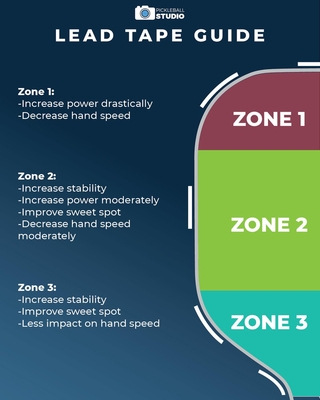
More and more pros and advanced-level players now add lead to the edges of their paddle to add weight or change the weight distribution. Adding weight adds power to your game. Force = mass x acceleration. More mass, more force. When it comes to weight distribution, the effects vary based on where the weight is placed.
The ATP is one of the most beautiful shots in pickleball. It's hard to find one more beautiful than a match-ender to advance to the gold medal.
Hand speed is a luxury in the game of pickleball. With fast hands, you can be more aggressive and play with more margin for error.
"The future of the game is in hand speed.”
A common piece of advice in pickleball is to slice your return, pushing the ball deep into the court and keeping the bounce low.
What you don't hear is what to do if you're the team receiving that ball.
Share with your friends
Pickleball is often times described as a game of momentum swings, where one player or one team can go on runs and string several points together.
There are two critical kinds of balance in doubles pickleball. And, both are equally important to your success on the court.
Picture this: You or your partner pop a ball up to your opponent. The alarm bells go off and you begin to retreat. Your goal is to get to the baseline to play some defense.
Ok, I whiffed on an overhead…again.
I finally made it to the court this week for the first time in...*checks calendar*...way too long. Let me tell ya, pickleball rust is a real thing. Reaction time decays and the feel for drops and resets suffers.
Class please say 'Hello' to Tommy. Tommy say 'Hello' to the class. Tommy Tomahawk may be the new kid in pickleball but according to Zane Navratil, the Tomahawk is not going anywhere.
Most pickleball players and coaches tend to think of third shot drops and third shot drives as very different techniques — almost opposites — from one another.
The most frustrating players to play against are the ones who beat you in the soft game. Here are some great tips to make sure you come out on top when the game slows down.
Time to choose: third shot drive or third shot drop?
Either answer works. You're both right. What you need to remember is: just because you chose one or the other, you're not stuck with that decision.
Pickleball/tennis grip names are the worst. Continental, Eastern, Semi-Western...are we holding a paddle, or joining Magellan's next expedition?
You and your partner are back by the baseline. Your opponents get cheeky and sprinkle a drop shot in the kitchen.
The alarms go off and you sprint for the dropper. You make it to the descending ball just in the nick of time.
Where do you hit your third shot drop? Middle? Sideline? Or do you just close your eyes and hope for the best? Many top players recommend targeting the backhand of the left-side player.
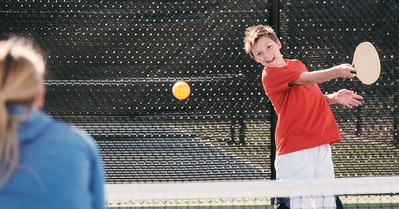
The backhand flick is a shot that separates the men/women from the boys/girls on the pickleball court. The flick is a backhand roll shot that is used to attack an opponent. It is typically deployed as a speedup volley during a dink battle.
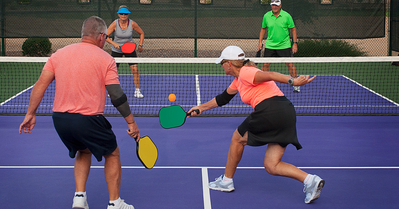
Ready, React, Execute, Improve. These four steps apply to every shot on the court. Each is made easier by properly carrying out the preceding step. Ready, React, Execute, Improve. These four steps apply to every shot on the court. Each is made easier by properly carrying out the preceding step. Ready - Ready position is the first step in this journey. You should be balanced, feet shoulder width apart, paddle up. This is known as a neutral body position. React - While your opponent is executing their shot, it's time to react.
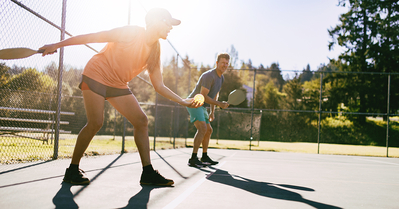
Newton's Second Law: the acceleration of an object depends on the mass of the object and the amount of force applied. It's important to keep this top of mind when switching from tennis to pickleball. A pickleball is less than half the mass of a tennis ball. According to Sir Issac, that means half the force is required to accelerate the ball to the same speed. So why are you winding up like you're Rafa Nadal on your forehand drive?
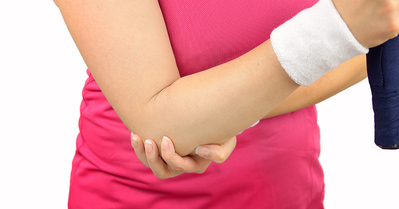
What is tennis elbow?
Lateral epicondylitis—aka tennis elbow—occurs when the tendons adjoined to the outer part of the elbow become inflamed. Tendons are the strong connective tissues that connect muscles to bones. Tennis elbow specifically has to do with the tendons of the extensor muscles in the forearm (the muscles that pull the wrist back and extend the fingers). These muscles connect to the outer boney protrusion of the humerus (the arm bone) at the elbow.
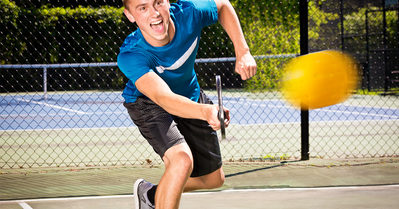
Not everyone can pack the same power into a serve as some players. But what almost everyone can do is mix it up.
Great baseball pitchers don’t last long throwing straight fastballs. It is the variety of pitches and command of the strike zone that sets them apart. Is there a pickleball equivalent? Yes!!
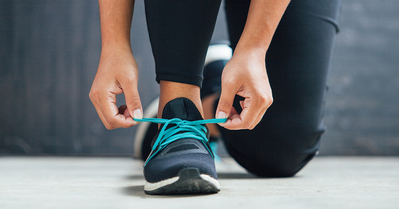
Do you experience foot pain during or after playing pickleball? If so you are certainly not alone. It’s not uncommon for many people, especially when doing a lot of running, to experience a variety of foot issues. Sometimes people assume they have an ill-fitting shoe when in fact simply lacing the shoe in a different way can alleviate the discomfort. The illustration and following explanations below shows lacing techniques for addressing five of the most common foot types and issues. Experimenting with these might help you turn a pair of shoes you thought did not fit quite right into your new favorite pair.
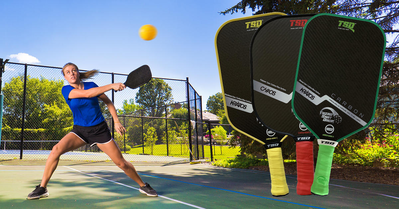
Springtime is upon us, which means only one thing — it’s time to shout “Pickle!” and give your buddies the most epic ace serve they’ve ever seen! But if you’re going to do that, you’ll need the right tool for the job; meaning a pickleball paddle that matches your.
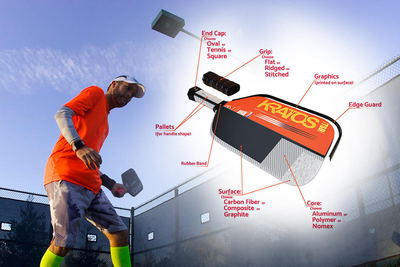
With over 15,000 pickleball courts throughout the nation, it is safe to say that pickleball is here to stay. Invented in 1965 by a few dads trying to spice up their kid’s summer activities, pickleball is relatively new to the sports scene. Yet, it’s popularity is skyrocketing, in part, because persons of all ages and abilities can play. From the energetic schoolkid to the slightly slower moving senior citizen, pickleball has something to offer everyone. As with any sport rising in popularity, the technology to support the sport has come a long way over the past 5 decades.
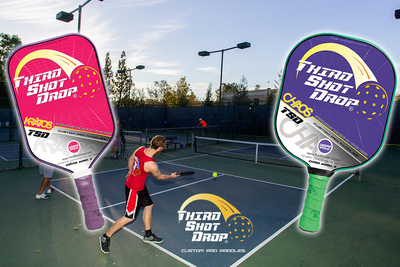
Try saying that title ten times fast and let us know how it turns out for you! While it is not quite, “Sally sells seashells down by the sea shore,” it is true to say that a pickleball player is only as good as their pickleball paddle. We are witnessing a season of explosive growth in pickleball with both young and old participants. Appropriately, the free market has responded with an explosive growth in the type of technology and quality of production in pickleball paddles. Meaning, the next time you go up against a pickleball foe, he or she might be wielding a paddle that outclasses what you’ve brought to the table. So you’re the type of pickleball player who hates to lose, let’s take a look at some of the most advanced pickleball paddles we’ve brought to the market to date.
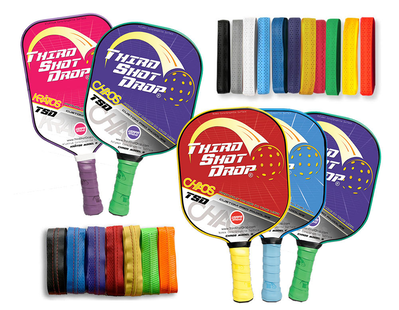
As a relatively new pickleball player—I've been playing three days a week since October 2018— I've discovered a couple techniques that are working for me that too few other players have even tried, so I want to share them here.
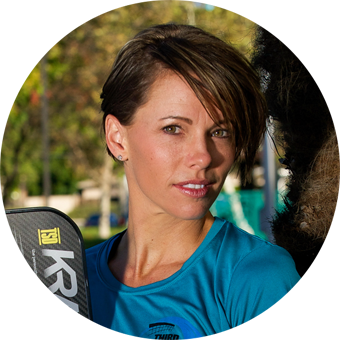
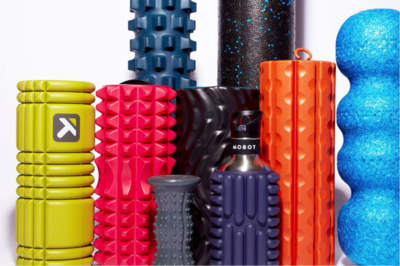
Dozens of studies have linked foam rolling with improved range of motion, flexibility, and mobility as well as reduced soreness. Done before a workout, it can act like a dynamic warmup — increasing circulation, loosening tight spots, and priming your body to move. After a workout, it can act like a sports massage — reducing muscular tension and flushing out toxins to help recovery.
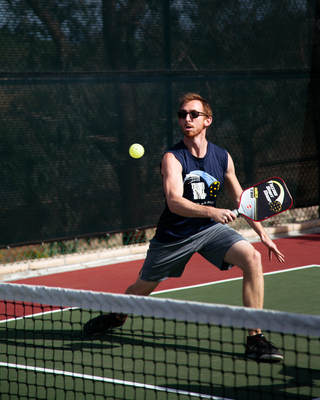
Weight seems to be a hot point with a lot of players - with many misconceptions. I can’t tell you how many times the first thing that comes out a player’s mouth is “What’s your lightest paddle?” Many pickleball players believe a light paddle is optimal - for their elbow, for their shoulder and for their reaction and performance. This is patently untrue for many reasons grounded in science, physics, logic and experience.
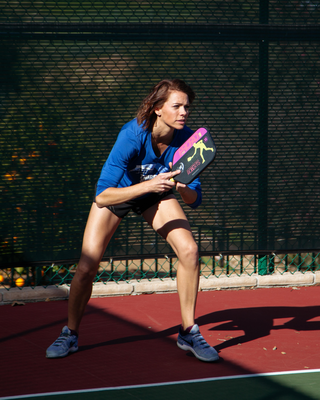
Pickleball can be a great way to get your heart rate up and your body moving. It combines running, jumping, extension and coordination, but unfortunately subjecting our joints to daily wear and tear can lead to injures. It’s imperative that pickleball players pay close attention to the care and protection of their joints.
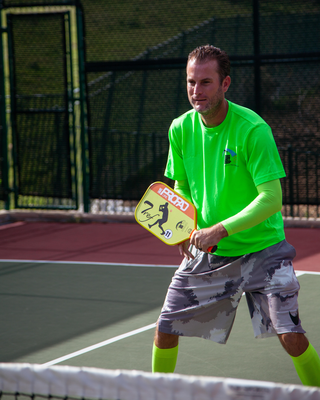
I think most pickleball players do NOT play recreational games the same way they play in tournaments. Yes, you are out there playing rec. games with your friends on a social level. The only problem is you might be learning bad habits when you are only giving 50-75% during practice.
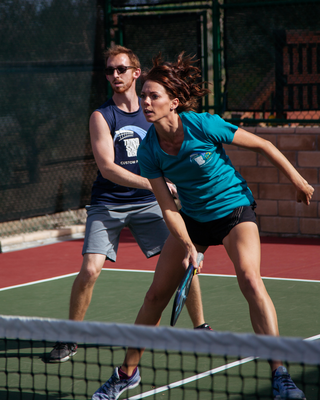
Want to become a better pickleball player? You have to be willing to expose your weaknesses rather than trying to hide them. To strengthen those weakness you need to repetitively practice them until they become strengths. Here are some of our favorite drills you can do on a weekly basis. We are sure that your game will improve by putting in the work.
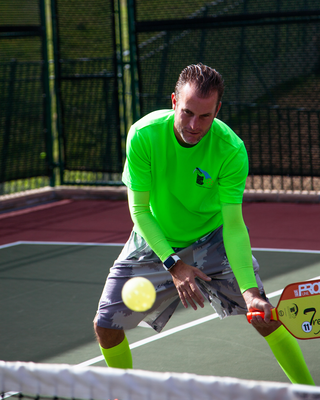
I think most pickleball players will answer the question with a “No”. In my experience playing pickleball socially and competitively, I have seen that most players “play” more than they “practice”. Is it a pickleball thing? Maybe….. Probably…..
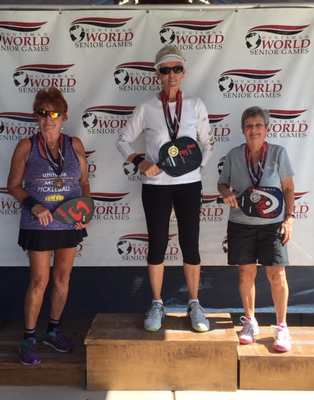
Many competitive players enter the court for their match with little or no thought to conditions of the weather, courts, and type of ball. IF CONDITIONS ARE NOT IDEAL, LOSERS COMPLAIN AND WINNERS ADJUST!
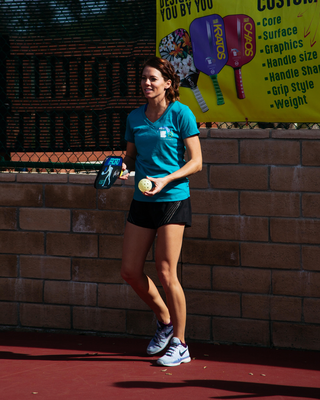
This is Ashley Roberts and I’m here to help you get Pickeball Fit. You are on the courts, you are competing (recreationally or in a tournament); you are competing and therefore, you are an athlete. So you better act like one! You better train like one!
Today we are going to talk about Reaction Time.
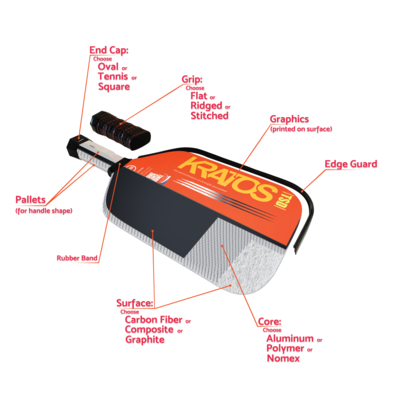
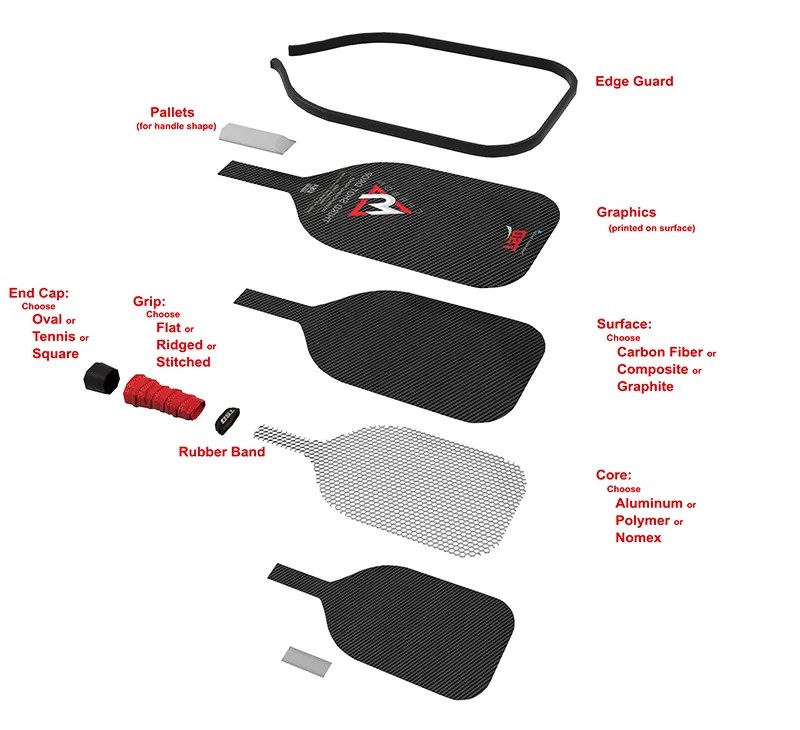
Many players (including pros) don’t understand what’s in a paddle so they don’t really know that a core or surface really is and WHY it makes a difference to THEM.
It’s not about the type of core or type of surface- it’s about the notion that there are different materials that affect the way their paddle performs and we are the ONLY company that offers this to every player.
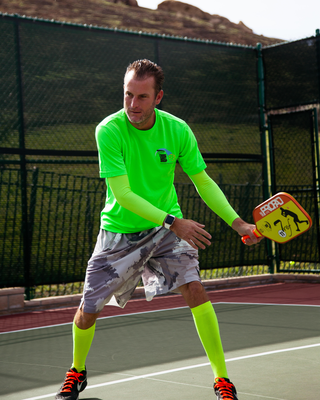
I think most pickleball players may not know the answer to that question. For me the answer is very simple. I come from a competitive tennis background and in tennis the mental game is very important and usually the difference between winning and losing.
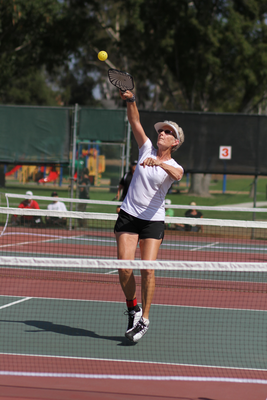
Raising your skill level requires overcoming the false belief that powering the ball on every shot will win games. The goal for increasing your skill is to first become patient and disciplined in playing a soft game, always anticipating the correct time to “power the shot for the win.” Achieve the “Pickleball PHD (patiently happy dinker/dropper).” Sound boring? Maybe at first; but when you discover how effective it is,and how many more winning points it produces, it will become “stunningly boring.”
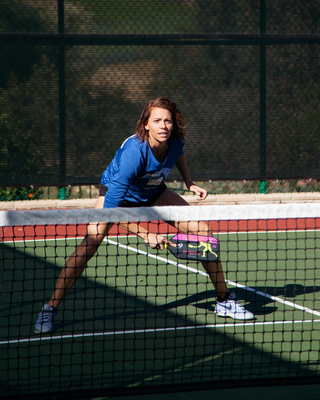
Training is extremely important and should form an integral part of an athlete’s daily routine. Creating good habits and developing muscle memory is so important in having consistency in your game.
Now that we have learned what the core is and how to use it to maximize our body mechanics, let’s now look at our footwork.
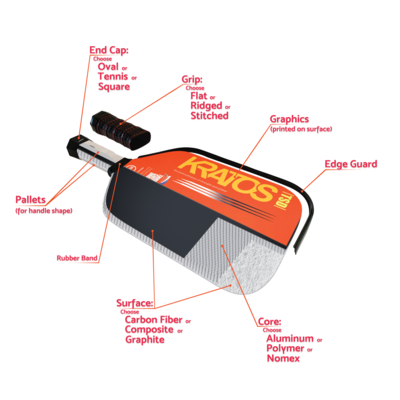
Many players (including pros) don’t understand what’s in a paddle so they don’t really know that a core or surface really is and WHY it makes a difference to THEM. It’s not about the type of core or type of surface- it’s about the notion that there are different materials that affect the way their paddle performs and we are the ONLY company that offers this to every player.
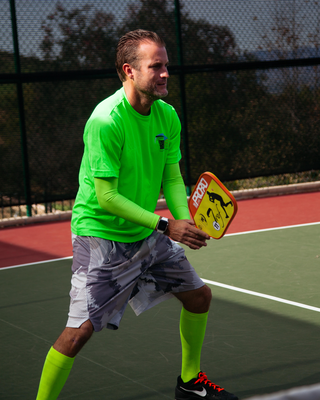
I think most pickleball players rarely spend enough time warming up during recreation play, but do they spend enough time warming up during a tournament. The average warm up during recreation play is roughly 37 seconds. During most tournaments you have 8 minutes to start your match once your name is called. Does this give you ample time to warm up? The answer is most likely not.
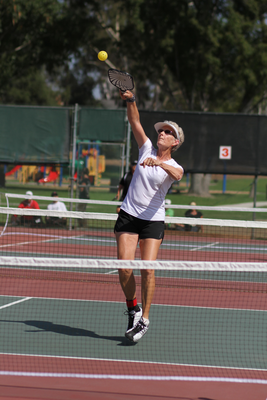
Perhaps the MOST NEGLECTED part of improving your game is the most important part-- FOOTWORK! No matter how great your dinks, volleys, and groundstrokes, lazy/sluggish/slow/sloppy footwork will frequently result in loss of the point, and ultimately keep you “stuck” at your current skill level.
Making less errors and hitting with power is predicated on your body being in a balanced stance and positioned to hit the ball in your power/comfort zone, which is one foot in front and no farther than one foot to either side.
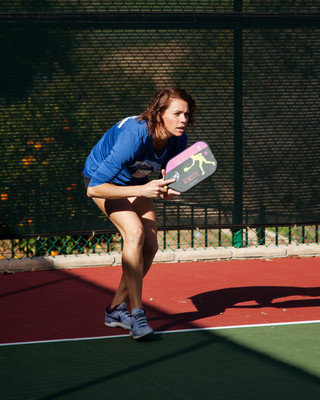
Ashley Roberts here with Third Shot Drop Custom Paddles. I am a certified personal trainer with 17 years of experience.
Training is extremely important and should form an integral part of an athlete’s daily routine. Last month we talked about the foundation of your body. It is so critical to do corrective exercises and stretches to ensure the length/tension relationships between our muscles is balanced so that our Kinetic Chain is optimized to perform it’s best.
There
are so many paddles each pickleball player has to choose from.
Some
are suited for them, others are not.
We
hear over and over from players - “I already have 5 paddles in my bag”. This tells us they are blindly searching, hoping to hit the bullseye in
the dark with their eyes closed.
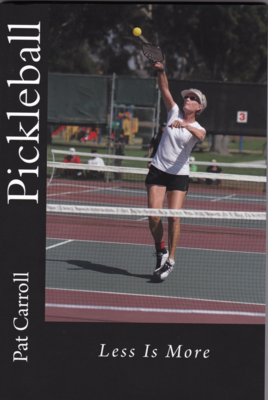
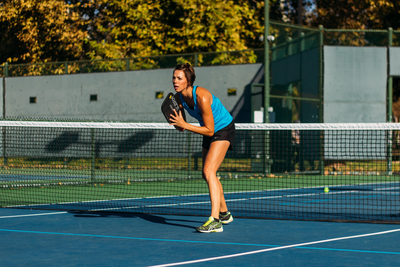
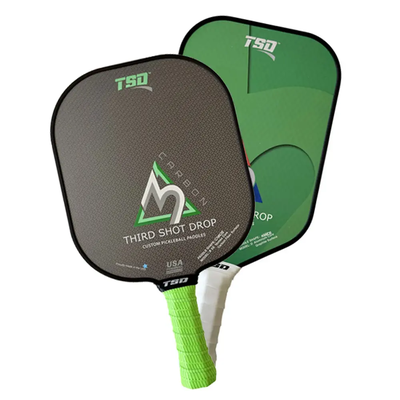
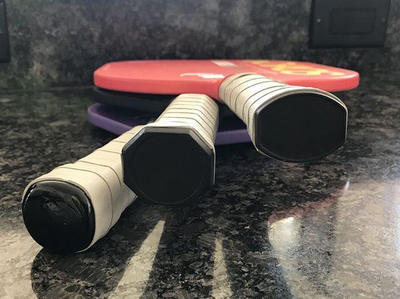
Finding the right paddle for you isn’t about what Bob or Sally plays with or which colors look best. It’s about building the right tool for the job. Players that understand their game and are educated in the playing characteristics of the materials that make their paddle and cause it to play a certain way, are better equipped to perform to the best of their abilities. Knowing about cores, surfaces, weights and handles/grips will enable you to build the paddle that will elevate your game. When you have confidence in your equipment, that translates into performance on the court!